
Blog
How to Choose Bar Furniture for Hotel Interior Design: Complete Buyer’s Guide

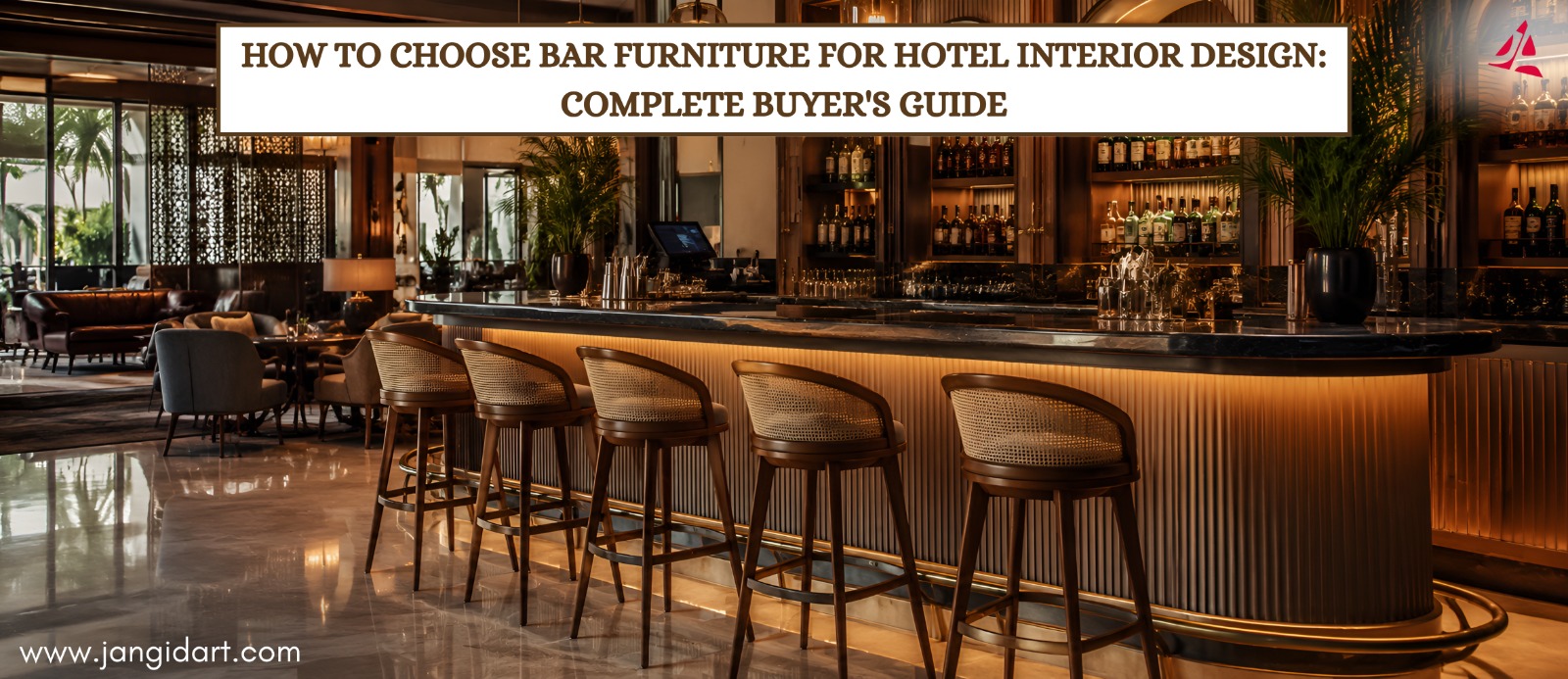
Bar furniture is often chosen last in a hotel interior design project, and that is usually where the confusion starts. Wall finishes, lighting, and flooring get signed off early, and then bar stools, counters, and back-bar cabinets are picked in a rush—based on how a photo looks online rather than how the piece will actually perform after six months of nightly use. This guide is written to remove that guesswork. It is built from a manufacturing point of view, not a styling one, and it walks through material, height, durability, and budget in the order a buyer should actually be deciding them.
Quick Answer: Bar furniture for a hotel is best chosen by working through four filters in sequence — material suited to the climate and usage, correct height for the counter type, durability specifications appropriate for high-traffic hospitality use, and a realistic budget that accounts for the full order rather than a single sample piece. Solid wood (sheesham, mango, or teak) combined with reinforced joinery is generally recommended for Indian hotel bars, since it balances durability, humidity resistance, and the warm aesthetic most hospitality interiors are built around.
What Is Bar Furniture in the Context of Hotel Interior Design?
Bar furniture is defined, in a hotel setting, as any piece specifically built to support the function of a bar counter — bar stools, bar chairs, bar tables, back-bar cabinets, and service trolleys. It is treated as a distinct category from general hospitality seating because it is subjected to a different kind of wear: constant swiveling or shifting, nightly cleaning, spills, and — in many Indian hotels — heavier footfall during peak hours than a restaurant or lobby chair typically sees.
This is also why bar furniture is rarely interchangeable with dining or lounge furniture, even when the finishes match. A dining chair is not built for the seat height, footrest positioning, or repeated pivoting motion that bar seating requires, which is why hotel projects that try to repurpose regular seating at a bar counter tend to see faster wear and structural loosening than expected.
How Should Bar Furniture Be Chosen for a Hotel Bar?
Bar furniture is best selected using a four-step filter — material, height, durability, and budget — applied in that order rather than chosen on appearance first.
Material Is Assessed First
Material is treated as the starting filter because it determines how the furniture will behave under daily hotel use, not just how it looks on delivery day.
Solid Wood Options
Sheesham (Indian rosewood) and mango wood are widely used across Indian hotel and hospitality furniture manufacturing, largely because both offer a strong hardness-to-cost ratio and take finishes well. Teak is generally considered the most durable of the commonly used Indian hardwoods for long-term hospitality use, though it is priced higher. According to Bureau of Indian Standards guidance on permissible moisture content for timber, wood used in furniture is expected to be seasoned to a moisture level appropriate for the region it will be used in—a detail worth confirming with any manufacturer, since improperly seasoned wood is one of the most common causes of joint loosening and warping in hotel bar furniture within the first year.
Metal and Mixed-Material Options
Powder-coated metal frames, often paired with a wood or marble top, are increasingly used in contemporary hotel bar design for a leaner, more industrial aesthetic. Metal is generally chosen when a bar is expected to see extremely heavy nightly turnover, since it resists the wear patterns wood eventually shows at contact points such as footrests and armrests.
Height and Ergonomics Are Matched to the Counter
Once material is settled, height is matched to the specific counter the furniture will be used with, since a mismatch here is one of the most common—and most expensive to fix—mistakes in hotel bar procurement. This is covered in detail later in this guide.
Durability Is Verified for High-Traffic Use
Durability is confirmed last, after material and height are settled, by checking joinery type, frame reinforcement, and—where upholstery is involved—fabric or leatherette wear rating. Reinforced joinery with concealed brackets is generally recommended over exposed screw fittings, since exposed fittings tend to loosen faster under the repeated shifting motion bar seating experiences.
Which Bar Furniture Pieces Are Essential for a Hotel Bar Setup?
A complete hotel bar setup is generally built from four core furniture categories, each serving a distinct function.
Bar Stools and Chairs
Bar stools and chairs form the primary guest-facing seating and are usually the highest-turnover item in the entire setup, since they are used continuously through service hours. Both wooden bar chairs and metal bar chairs are commonly specified depending on the interior’s material palette, with wood generally preferred for warmer, resort-style interiors and metal for more contemporary or industrial concepts.
Bar Tables and Counters
Bar tables are used both as standalone high-top seating areas and as the surface guests lean on while ordering, which means top material needs to resist spills, heat from glassware, and repeated wiping. A well-built bar table in solid wood or a durable laminate top handles this consistently better than a soft or porous surface.
Bar Counter Cabinets and Back Bar Storage
Back-bar storage is treated as functional infrastructure rather than decor, though it is highly visible to guests, which means it needs to balance display appeal with practical bottle and glassware storage. Bar counter cabinets are typically built with a mix of open shelving for display and closed storage for stock, and this balance is worth specifying clearly with the manufacturer before production begins.
Bar Service Trolleys
Service trolleys are used to move drinks, garnishes, and glassware between the bar and seating areas without repeated staff trips back to the counter, and they are particularly useful in hotel setups where the bar also serves poolside or lobby seating. A bar service trolley is generally chosen based on wheel quality and load capacity as much as finish, since a trolley that wobbles under a full tray becomes a liability rather than a convenience.
How Is Bar Stool Height Determined for Hotel Counters?
Bar stool height is determined by the height of the counter it will be paired with, and getting this wrong is one of the most common reasons hotel buyers end up reordering furniture mid-project.
| Counter Type | Counter Height | Recommended Seat Height | Typical Use |
| Standard dining/counter height | 34–36 inches | 24–27 inches | Casual lounge seating, breakfast counters |
| Standard bar height | 40–42 inches | 29–32 inches | Main hotel bar counters |
| Extra-tall bar height | 43–45 inches | 33–36 inches | Statement or feature bar counters |
A gap of roughly 10–12 inches between the top of the seat and the top of the counter is generally recommended for comfortable knee and arm clearance, regardless of which height category is used. This spacing is explained in more detail in this guide to choosing the right bar stool height, which is worth reviewing before finalizing any bulk order, since correcting a height mismatch after delivery is far more expensive than measuring the counter correctly the first time.
What Materials Work Best for Bar Furniture in Indian Hotel Climates?
Material selection for Indian hotel bars is generally driven by humidity and seasonal moisture variation more than any single environmental factor, since most of the country experiences a distinct hot, dry season followed by a humid monsoon.
- Sheesham wood is widely used because it has good natural resistance to warping when properly seasoned, making it a dependable choice across most Indian climate zones.
- Mango wood is a cost-effective option that performs well when finished correctly, though it benefits from slightly more careful sealing in high-humidity coastal regions.
- Teak remains the benchmark for long-term durability in Indian hospitality furniture, largely due to its natural oil content, which gives it stronger inherent moisture resistance than most alternatives.
- Powder-coated metal frames are a strong choice for coastal or very high-humidity hotel locations, where wood movement is harder to control even with proper seasoning.
Because timber moisture content varies significantly by region, wood used for hotel furniture is expected to be seasoned according to the moisture content zone it is being supplied to, a principle set out in the Bureau of Indian Standards’ IS 287 guidance on permissible moisture content for timber. This is a reasonable question to ask any bar furniture manufacturer directly—a manufacturer supplying furniture for a coastal Kerala resort and a Rajasthan desert hotel should not be using timber seasoned to the same moisture target for both.
Bar Furniture Buying Process — A Step-by-Step How-To Guide
Bar furniture procurement for a hotel project is approached most reliably as a six-step process.
Step 1: Counter Dimensions Are Measured First
Counter height, depth, and available floor clearance are measured before any furniture is selected, since these dimensions determine both stool height and footprint requirements.
Step 2: Material Is Shortlisted Against Climate and Interior Style
Two or three material options are shortlisted based on the climate zone and the interior’s design direction, narrowing the decision before samples are requested.
Step 3: Samples Are Requested Before Bulk Ordering
A physical sample — not just a photograph — is requested from the shortlisted manufacturer to verify finish quality, joinery, and weight in person, since finish tone and grain can vary meaningfully from digital renders.
Step 4: Durability Specifications Are Confirmed in Writing
Joinery type, wood seasoning standard, and upholstery wear rating (where applicable) are confirmed in writing with the manufacturer, rather than assumed from a general product description.
Step 5: Lead Time and Customization Scope Are Finalized
Lead time for the full order — not just the sample — is confirmed, along with what can realistically be customized (dimensions, finish, upholstery) without significantly extending production time.
Step 6: A Full-Order Budget Is Locked, Not a Per-Piece Estimate
The complete order cost, including packaging and freight for out-of-state or export delivery, is finalized before production begins, since per-piece pricing alone often excludes costs that become significant at scale.
How Is Custom Bar Furniture Different From Ready-Made Options?
Custom bar furniture is built to the exact dimensions, finish, and quantity specified by the buyer, while ready-made bar furniture is manufactured in standard sizes and finishes ahead of demand. The practical difference shows up in three areas: fit, consistency across a large order, and lead time.
For a boutique hotel with a single, uniquely shaped bar counter, custom furniture is generally the better fit, since ready-made stool heights or table dimensions rarely match a non-standard counter exactly. For a hotel chain ordering the same bar setup across multiple properties, custom manufacturing also has an advantage most buyers don’t initially consider — finish and dimension consistency is guaranteed across the entire order, which is harder to achieve when sourcing ready-made pieces from mixed batches or multiple vendors.
The trade-off is lead time. Ready-made furniture is available faster, while custom orders require a production window that should be planned into the overall project timeline rather than treated as a last-minute add-on.
Why Are Bar Furniture Manufacturers in Jodhpur Preferred by Hotel Buyers?
Jodhpur is one of India’s most established hubs for solid wood furniture manufacturing, and this reputation is built on a combination of long-standing woodworking craftsmanship and direct access to hardwood supply chains that many other manufacturing regions in India do not have at the same scale. Hotel and hospitality buyers frequently favor bar furniture manufacturers in Jodhpur specifically because the region’s manufacturing base is built around solid wood and metal-wood hybrid furniture — the exact combination most hotel bar furniture requires — rather than mass-market laminate furniture aimed at retail volume.
This concentration of manufacturing expertise also means shorter internal supply chains for raw hardwood, metal fittings, and upholstery, which generally translates to more competitive lead times on custom hospitality orders compared to sourcing from regions where these inputs need to be brought in from further away.
Bar Furniture Budget Planning for Hotels
Budgeting for hotel bar furniture is most reliably done by separating unit cost, customization cost, and freight, rather than working from a single blended estimate.
| Furniture Type | Approx. Price Range (INR, per unit) | Key Cost Drivers |
| Wooden or metal bar stool | ₹4,000 – ₹8,000 | Wood species, upholstery, frame reinforcement |
| Bar table (2–4 seat) | ₹10,000 – ₹30,000 | Top material, wood species, size |
| Bar counter cabinet (per running foot) | ₹8,000 – ₹25,000 | Storage configuration, finish, hardware |
| Bar service trolley | ₹6,000 – ₹15,000 | Wheel quality, load capacity, finish |
These ranges reflect standard hospitality-grade specifications rather than budget or ultra-premium extremes, and they typically shift by 15–25% depending on customization scope, finish complexity, and order volume. A contingency of at least 10–15% is generally recommended for any custom hotel bar furniture order to account for finish revisions or minor dimension adjustments discovered during the sampling stage.
What Mistakes Do Hotel Buyers Commonly Make When Choosing Bar Furniture?
Several recurring mistakes are seen in hotel bar furniture procurement, most of which stem from skipping the sequence outlined earlier in this guide.
- Furniture is ordered before the counter is finalized. Height and footprint decisions made in isolation from the actual counter design frequently result in mismatched seating that needs to be reordered.
- Photos are trusted over physical samples. Finish tone, wood grain, and weight are difficult to judge accurately from a product photograph, and this is one of the most common sources of post-delivery disappointment.
- Durability specifications are assumed rather than confirmed. Joinery quality and wood seasoning standards vary meaningfully between manufacturers, even when the finished pieces look similar.
- Freight and customization costs are left out of the initial budget. A per-piece quote rarely reflects the true landed cost of a full hotel order, particularly for out-of-state or export delivery.
Explore Bar Furniture Collections
A full range of hotel-grade bar furniture — from wooden bar chairs and metal bar chairs to bar tables, bar counter cabinets, and bar service trolleys — is available within Jangid Art’s bar furniture collection. For buyers planning a full hospitality space rather than the bar alone, the hotel and resort furniture range is also worth reviewing alongside further reading on current hotel furniture trends and why hotel buyers choose furniture manufacturers based in Jodhpur.
Frequently Asked Questions
What is the standard height for a hotel bar stool?
The standard seat height for a hotel bar stool is generally 29 to 32 inches, matched to a standard bar counter height of 40 to 42 inches. For example, a hotel installing a 42-inch main bar counter would typically be supplied stools at the upper end of that range, around 31 to 32 inches, to maintain the recommended clearance between the seat and the counter top.
Which wood is best for hotel bar furniture in India?
Teak is generally considered the best wood for hotel bar furniture in India due to its natural oil content and long-term durability, though sheesham is a widely used and cost-effective alternative. A resort in a humid coastal location, for instance, would typically be better served by teak or well-sealed sheesham than by a softer, less moisture-resistant wood species.
How long does custom bar furniture take to manufacture?
Custom bar furniture typically takes anywhere from four to ten weeks to manufacture, depending on order size, finish complexity, and material availability. A hotel ordering twenty custom bar stools in a standard finish might see a shorter production window than a property ordering fully bespoke counters with integrated storage and non-standard dimensions.
Can bar furniture be customized to match an existing hotel interior?
Yes, bar furniture can generally be customized in finish, dimension, and upholstery to match an existing hotel interior, provided the base material and structural specifications are confirmed with the manufacturer in advance. A hotel undergoing a partial renovation, for example, might request a stain finish matched to existing wood tones so the new bar seating doesn’t visually clash with untouched areas of the property.
Is metal or wood better for a high-traffic hotel bar?
Metal is generally better suited to extremely high-traffic hotel bars due to its resistance to the wear patterns wood develops at repeated contact points, while wood is preferred where a warmer, more traditional aesthetic is the priority. A busy nightclub-style hotel bar, for instance, often performs better long-term with metal-framed stools, while a boutique heritage property is more likely to prioritize solid wood for its visual character.
How is a reliable bar furniture manufacturer identified?
A reliable bar furniture manufacturer is generally identified by their willingness to provide physical samples, confirm durability specifications in writing, and give a realistic lead time rather than an overly optimistic one. A manufacturer that hesitates to specify wood seasoning standards or joinery type, for example, is generally a signal to request more documentation before committing to a bulk order.
What is the difference between bar furniture and general hospitality furniture?
Bar furniture is purpose-built for counter-height seating and the specific wear patterns of bar service, while general hospitality furniture covers the broader range of hotel seating, tables, and storage used across lobbies, restaurants, and guest rooms. A hotel lobby armchair, for example, is not built to the same height or joinery specification as a bar stool, which is why the two categories are sourced and specified separately even within the same property.