
Blog
Hotel Room Furniture Essentials: How to Choose the Right Furniture for Guest Rooms

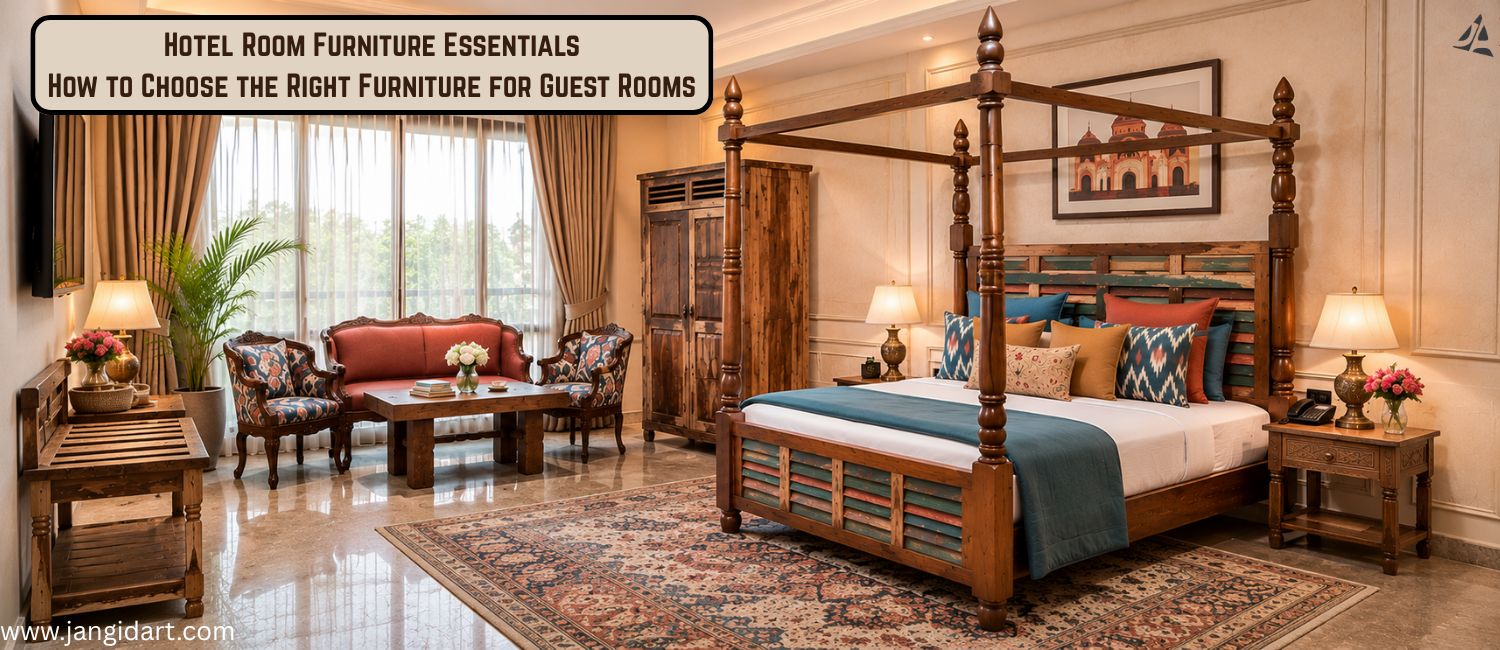
Hotel room furniture directly affects guest comfort, housekeeping speed, replacement cost, and review scores. Wrong choices are usually discovered only after installation, when drawers jam, finishes peel, or walkways are found to be too narrow. This guide explains how guest room furniture is planned, what each piece must deliver, and how suppliers are evaluated.
What Is Included in Hotel Room Furniture?
Hotel room furniture refers to all fixed and loose pieces placed inside a guest room. A standard room set is usually made up of:
- Bed frame and headboard
- Bedside tables
- Wardrobe or open closet
- Writing desk or study table, with a chair
- Lounge chair or sofa
- Coffee table or side table
- Luggage rack
- TV console or wall-mounted panel
- Mirror, ottoman, and minibar unit (in higher categories)
Together with soft goods, lighting, and décor, these pieces form the complete set of hotel room furnishings. Each item is expected to meet three tests: guest comfort, operational durability, and brand consistency.
Step 1: Room Type and Guest Profile Should Be Defined First
Furniture is best selected after the room’s purpose has been defined. A business hotel, a heritage resort, and an extended-stay property each require different specifications.
| Property type | Furniture priorities |
| Business hotel | Ergonomic desk and chair, power access, compact wardrobe |
| Resort | Lounge seating, larger wardrobes, balcony pieces |
| Boutique or heritage | Statement headboards, handcrafted detailing |
| Budget or mid-scale | Modular, easily replaced, low-maintenance finishes |
| Extended stay | Storage depth, work and dining surfaces |
The guest profile (leisure, corporate, family, or international) should also be documented, because it determines storage volume and seating count.
Step 2: Space Planning Must Come Before Product Selection
Furniture dimensions are often finalized before circulation space is checked. This order should be reversed.
- A clear walking path of about 36 inches (91 cm) is generally recommended around the bed and main route, and is essential in accessible rooms.
- Wardrobe doors and drawers should be confirmed to open fully without hitting the bed or desk.
- Wall-mounted or floating pieces are often preferred in compact rooms because the floor area is visually opened and cleaning is simplified.
- Furniture scale should be matched to ceiling height, as oversized headboards can overwhelm low ceilings.
A one-room mock-up is commonly approved before bulk production starts, so layout issues are caught early.
Step 3: Each Core Piece Should Be Specified Carefully
Beds and headboards
The bed is the most scrutinized item in bedroom hotel furniture. Frames should be rigid and silent under movement, and slat spacing should suit the mattress type. Mattress-top height is typically kept between 22 and 26 inches for comfortable entry and exit. Headboards are either upholstered for acoustic softness or finished in solid wood for easier cleaning. A range of options is available in hotel room beds built for hospitality use.
Wardrobes and storage
Storage needs are determined by average length of stay. Hanging rails, a safe, shelves, and luggage space should be provided at proper heights. Soft-close hinges and metal drawer runners are recommended, as drawers are among the first components to fail. Hospitality-grade hotel room wardrobes and almirahs can be configured with open, sliding, or hinged doors.
Desks and work surfaces
Work-friendly rooms are increasingly expected by guests, even in leisure properties. A desk height of 29–30 inches, a usable depth of at least 22 inches, and accessible power outlets are commonly specified. A well-proportioned hotel room study table can also serve as a dressing or dining surface.
Seating
Chairs are tested constantly, so frame joinery and fabric abrasion ratings matter. Armchairs are used for reading and lounging, while desk chairs are chosen for back support. Detailed selection criteria are covered in this guide to the top hotel room chairs for comfort and luxury interiors. Where space permits, a hotel sofa is added to create a separate seating zone in suites, and a hotel room coffee table completes the arrangement.
Luggage racks
Luggage racks protect beds and walls from suitcase damage. Folding units are preferred where flexibility is needed, whereas built-in units are favored for permanent, tidy layouts. The trade-offs are compared in folding vs. built-in luggage racks, and finished options can be browsed under hotel room luggage racks.
Step 4: Materials and Finishes Must Be Matched to Wear Patterns
Furniture in guest rooms is exposed to moving luggage, cleaning chemicals, humidity, and heavy turnover. Materials are therefore chosen for performance first and appearance second.
- Solid wood: Durable, repairable, and refinishable. Seasoned or kiln-dried timber (commonly with moisture content of about 8–12%) is used to prevent warping. Species such as sheesham are widely used in Indian hospitality projects; more detail is available in this overview of sheesham wood furniture manufacturers in Rajasthan.
- Engineered wood (MDF, plywood): Cost-effective for large panels such as wardrobes and headboards, provided edges are properly sealed.
- Metal: Used for frames, legs, and accents, with powder coating or plating applied to resist scratches and corrosion.
- Upholstery: Commercial-grade fabrics or leatherette are selected by rub-count rating. Stain resistance and fire-retardant treatment are expected.
- Surface finishes: Scratch-resistant PU or melamine coatings are favored, and laminates are specified for high-contact tops.
Fire-safety compliance (for example, relevant BS, CAL, or NFPA-aligned standards, depending on the market) should be confirmed in writing for foam and fabrics.
Step 5: Design Cohesion Should Be Maintained Across the Property
A guest room is not experienced in isolation. The lobby, corridors, restaurant, and pool areas shape the first impression, and consistent materials and colour palettes tie them together. Furniture planning for the lobby is covered in hotel lobby furniture, while dining zones are supported by cafe and restaurant furniture that can be matched with room finishes.
For properties that include dining outlets, hotel restaurant furniture is often specified in the same wood tone or metal finish as the guest rooms, so a unified identity is preserved. Current style directions are summarized in top trends followed by hotel furniture manufacturers in 2026.
Step 6: Resort Rooms Require Additional Considerations
Resort furniture is affected by factors that city hotels rarely face: humidity, sunlight, salt air, and balcony or villa-terrace exposure. Indoor and outdoor pieces should never be interchanged without checking material suitability. Ideas for premium resort layouts are provided in resort furniture ideas for luxury hospitality spaces, and the differences between indoor and outdoor specifications are explained in luxury furniture for resorts: indoor vs. outdoor. Terrace and poolside needs are met by hotel outdoor furniture.
Step 7: Budget Should Be Calculated on Lifecycle Cost
The lowest purchase price rarely produces the lowest long-term cost. A realistic budget is built from:
- Unit cost per room set
- Freight, installation, and breakage allowance
- Expected replacement cycle (commonly 7–10 years for well-made case goods)
- Repair and refinishing cost
- Spare parts and extra units (often 3–5% is ordered upfront)
When a property has 50 or more rooms, small savings per room are multiplied quickly, but so are early failures.
Step 8: Suppliers Should Be Vetted Before Orders Are Placed
The decision between buying from a trader and ordering from a manufacturer affects customization, lead time, and accountability. When hotel furniture suppliers in India are shortlisted, the following checks are recommended:
- Factory visit or virtual audit completed
- Sample room set produced and approved before bulk manufacturing
- Written specifications for timber, hardware, foam, and finish
- Delivery, installation, and defect-liability terms agreed
- Past hospitality projects verified through references
- Capacity confirmed for the required room count and timeline
Further guidance is available in how to choose the right hotel furniture manufacturer in India and in this guide to the best hospitality furniture suppliers for hotels in India. For upscale projects, luxury hotel furniture suppliers are generally expected to offer bespoke design, premium finishes, and project-level coordination. A profile of this category is provided on the luxury hotel furniture manufacturer in India page, and a broader overview is available in hospitality furniture manufacturers for hotels and resorts.
Common Mistakes in Hotel Room Furniture Selection
- Dimensions are finalized without a physical mock-up.
- Residential-grade hardware is used in commercial rooms.
- Cleaning access under beds and desks is ignored.
- Power outlets are not coordinated with the desk and bedside layout.
- Finishes are chosen for photographs instead of wear resistance.
- Accessible-room requirements are addressed too late.
Quick Checklist Before Final Approval
- Room layout verified with minimum clearances
- Sample approved for comfort, finish, and hardware
- Materials and fire-safety documents collected
- Warranty and after-sales terms recorded
- Delivery sequence aligned with the construction schedule
- Spare parts and replacement units included in the contract
A complete range of room, lobby, and outdoor pieces can be reviewed under the hotel and resort furniture collection, and project requirements can be shared through the contact page.
Frequently Asked Questions
What furniture is required in a standard hotel room?
A standard guest room is usually furnished with a bed, bedside tables, a wardrobe, a desk and chair, a lounge chair, a luggage rack, and a TV unit. Suites and resort rooms are often equipped with a sofa, coffee table, and dining or dressing area as well.
Which material is best for hotel room furniture?
No single material is considered best for every case. Solid wood is preferred for durability and refinishing, engineered wood is chosen for large panels and cost control, and metal is used for structural strength. A combination is commonly specified, with each material placed where it performs best.
How long does hotel furniture last?
Well-built hotel case goods are typically expected to last 7–10 years, while upholstered items are often refreshed sooner. Lifespan depends on material quality, hardware, housekeeping practices, and occupancy levels.
How much space should be left around the bed in a hotel room?
Roughly 24–36 inches of clear space is commonly maintained on the sides and foot of the bed, with 36 inches or more recommended in accessible rooms. This allows comfortable movement and cleaning.
Is custom furniture better than ready-made furniture for hotels?
Custom furniture is usually preferred when specific room sizes, brand themes, or storage needs must be met. Ready-made or catalogue items are faster to procure, but fit and finish may be limited. A sample approval is recommended in both cases.
What is the difference between hotel furniture and home furniture?
Hotel furniture is built for continuous commercial use. Stronger joinery, heavy-duty hardware, abrasion-rated fabrics, and stain-resistant finishes are required, along with compliance with fire-safety expectations.