
Blog
Hospitality Furniture Manufacturers: A Complete Guide for Hotels & Resorts

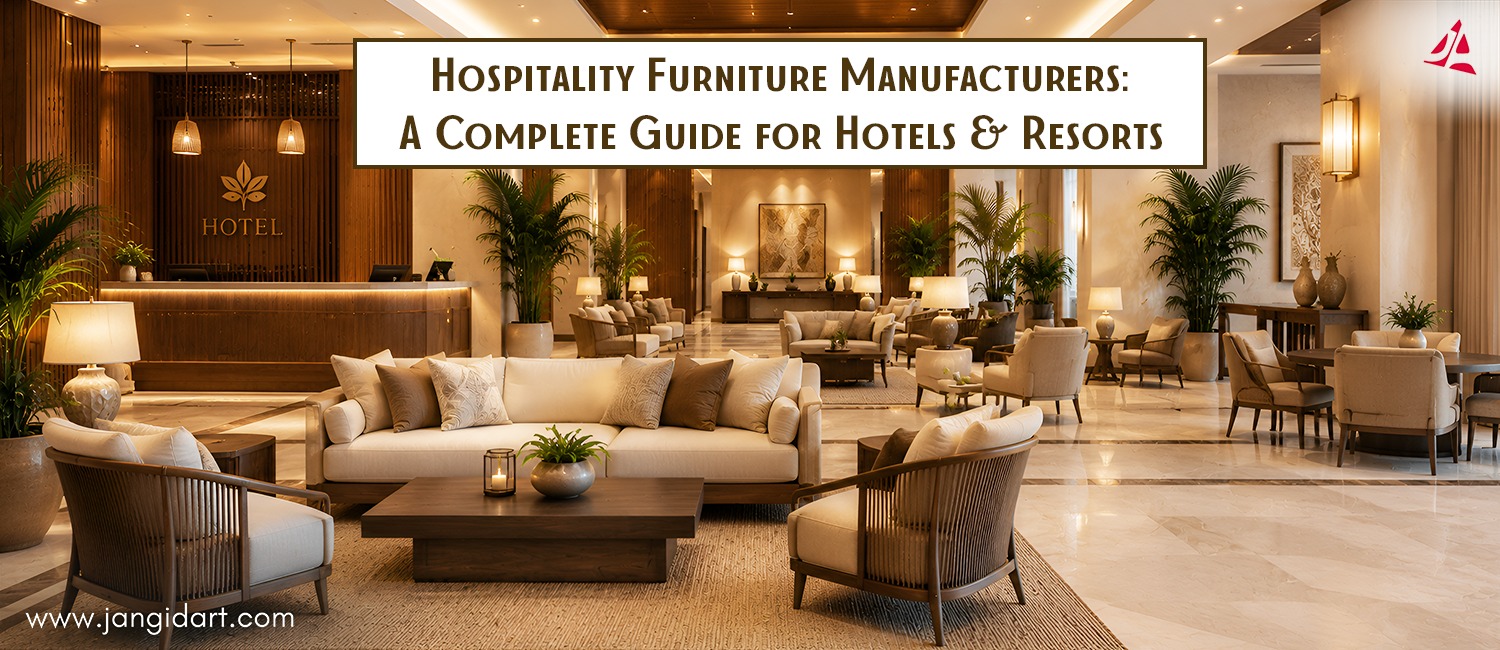
Hospitality furniture manufacturers are searched for at a specific point in a hotel or resort’s lifecycle — usually a new build, a renovation, or a brand refresh — when furniture needs to be sourced property-wide rather than for a single room. This guide is structured around that reality. It moves from defining the category, to selecting a manufacturer, to furnishing a property zone by zone, to the contract and compliance details that are typically overlooked until they cause a delay.
What Are Hospitality Furniture Manufacturers?
Hospitality furniture manufacturers are companies that design and produce furniture specifically for commercial guest-facing environments, including hotels, resorts, restaurants, cafes, and banquet venues. Their output is engineered for continuous daily use by different occupants, which is a fundamentally different design brief than furniture made for a single household.
What Is FF&E and How Does It Relate to This Category?
FF&E stands for Furniture, Fixtures, and Equipment, and it is the procurement term used across the hotel industry to describe everything a property needs beyond the building shell. According to Wikipedia’s overview of FF&E, the term is widely used in accounting and hospitality procurement to separate movable assets from fixed building costs. Hospitality furniture manufacturers are, in practice, the FF&E vendors responsible for the furniture portion of this budget line.
How Is Hospitality Furniture Different From Regular Commercial Furniture?
Hospitality furniture is different from regular commercial furniture because it is built around guest rotation rather than fixed staff use, meaning it must retain both comfort and appearance across thousands of different users rather than one consistent occupant. Office furniture, by comparison, is generally assigned to one person and does not face the same cleaning frequency or upholstery wear.
Why Do Hotels and Resorts Need Specialized Furniture Manufacturers Instead of Retailers?
Hotels and resorts need specialized manufacturers rather than retailers because retail furniture is not built to commercial-use standards and is rarely available in the volume or customization a property requires. A retail dining chair, for instance, is generally rated for residential frequency of use, while a restaurant chair inside a hotel may be sat in and moved several times a day, every day.
How Is the Right Hospitality Furniture Manufacturer Selected?
The right manufacturer is selected through a staged evaluation: production capability is verified first, followed by design and customization ability, then material and construction standards, then compliance documentation, and finally commercial terms such as lead time and payment structure.
Stage 1 — Is In-House Production Verified?
In-house production is verified through a factory visit or a live video walkthrough, since a manufacturer that subcontracts production offers less control over consistency across a large order such as 150 identical guestroom chairs.
Stage 2 — Is Design and Customization Capability Demonstrated?
Design capability is demonstrated when a manufacturer can translate a property’s actual floor plan and brand guidelines into a sample render or physical prototype, rather than offering only catalogue substitutions. This step matters most in properties where hospitality furniture design needs to align with an architect’s or interior designer’s original concept.
Stage 3 — Are Material and Construction Standards Confirmed?
Material standards are confirmed by requesting exact wood species, foam density, and joinery method in writing, since vague terms such as “solid wood” or “premium foam” leave room for substitution during production without the buyer’s knowledge.
Stage 4 — Is Compliance Documentation Available?
Compliance documentation, including fire-retardant fabric certification where applicable, is requested before an order is confirmed, particularly for guestroom and public-area furniture that falls under hotel fire-safety codes.
Stage 5 — Are Lead Time and Payment Terms Clear in Writing?
Lead time and payment terms are confirmed in writing, broken into production milestones, so that both parties have a shared reference point if a delay occurs partway through the order.
What Furniture Does a Hotel or Resort Actually Need, Room by Room?
A hotel or resort typically needs furniture across five distinct zones — guestrooms, lobby and reception, dining areas, outdoor spaces, and spa or wellness areas — and each zone has a different functional priority, even when sourced from the same manufacturer.
What Furniture Is Needed for Guestrooms?
Guestrooms require beds, headboards, nightstands, work desks, wardrobes, and seating, with storage and desk functionality prioritized for business travelers. A detailed breakdown of guestroom seating specifically is covered in the guide to hotel room chairs for comfort and luxury interiors.
What Furniture Is Needed for Lobby and Reception Areas?
Lobby furniture is selected for visual impact as much as comfort, since this is the first physical space a guest experiences, and is covered in depth in the luxury hotel lobby furniture ideas guide.
What Furniture Is Needed for Dining and Bar Areas?
Dining areas require tables and chairs built for frequent movement and cleaning, and bar areas require counter-height seating engineered separately from standard dining height. These two categories are covered respectively in the contemporary restaurant table and chair sets collection and the premium wooden bar table and chairs guide, with a broader look at bar-specific sourcing available through the bar furniture manufacturer resource.
What Furniture Is Needed for Outdoor and Resort Spaces?
Outdoor furniture is built with weather-resistant wood treatment and corrosion-resistant hardware, and this requirement is explained in the premium hotel outdoor furniture suppliers guide, while resort-specific furniture designed for extended outdoor exposure is addressed in the guide on what makes resort furniture ideal for luxury hospitality spaces.
What Furniture Is Needed for Event, Banquet, and Wellness Spaces?
Event and banquet areas typically require modular, foldable, or tent-compatible furniture that can be reconfigured for different group sizes, a need covered in the tent furniture manufacturing guide, while lounge-style seating used in spa waiting areas is addressed in the lounge furniture manufacturer resource.
What Materials Do Hospitality Furniture Manufacturers Work With?
Hospitality furniture manufacturers primarily work with solid wood species (Sheesham, teak, mango wood), metal frames (iron and stainless steel), and upholstery materials selected for stain and fade resistance, with material choice driven by the zone the furniture is placed in rather than by aesthetic preference alone.
Which Wood Is Used for Which Purpose?
Sheesham wood, noted in Wikipedia’s entry on Dalbergia sissoo for its density and dimensional stability, is generally used for indoor guestroom and dining furniture. Teak, described in Wikipedia’s entry on Tectona grandis as naturally resistant to rot due to its oil content, is generally used for outdoor and poolside furniture. Mango wood is generally used where a lighter, more budget-conscious option fits the project.
Summary for quick reference: Material selection in hospitality furniture design is treated as a functional decision first and a style decision second — the wrong wood in the wrong zone, such as an untreated indoor-grade wood placed outdoors, is one of the most common causes of early furniture failure on resort properties.
What Makes Modern Hospitality Furniture Design Different From Traditional Hotel Furniture?
Modern hospitality furniture design is defined by simplified joinery, mixed-material construction, and multi-functional pieces suited to smaller footprints, while traditional hotel furniture design is generally built around solid, heavily detailed wood forms.
Is Modern Design Chosen Only for Boutique Properties?
Modern design is not limited to boutique properties. Large chain hotels increasingly specify modern hospitality furniture for renovation projects because it is easier to standardize and replicate across multiple locations than heavily carved traditional pieces. Current movement in this direction is tracked in the top trends followed by hotel furniture manufacturers in 2026 and the broader hospitality furniture trends overview.
How the Custom Order Process Works When Sourcing Furniture for Hospitality Projects
Custom furniture orders for hospitality projects are processed through five stages, and understanding each one in advance reduces the risk of delays during a property opening timeline.
Stage 1 — Requirement and Space Sharing
Floor plans, brand guidelines, and reference images are shared with the manufacturer, forming the baseline for any design proposal that follows.
Stage 2 — Sampling and Approval
A sample piece or 3D render is produced and approved before the full batch begins. A resort ordering 40 outdoor loungers, for example, would typically approve one physical sample first, checking weather-resistant finish and comfort, before the remaining 39 are produced.
Stage 3 — Material Lock
Wood species, upholstery, and finish are finalized in writing at this stage, since changes requested after production starts generally extend both cost and timeline.
Stage 4 — Production and In-Process Quality Checks
Furniture is produced in batches with quality checks carried out at the joinery and finishing stages rather than only at the point of dispatch.
Stage 5 — Packing, Delivery, and Installation Support
Furniture is packed according to shipping distance, and installation support is typically included for larger orders such as a full guestroom rollout across multiple floors.
What Should Be Verified Before Signing a Contract With a Manufacturer?
Before a contract is signed, four items are verified: an itemized quotation specifying exact materials, a written production and delivery timeline, a signed sample approval, and a documented policy for handling manufacturing defects after delivery.
Summary for quick reference: These four items function as a pre-signing checklist, and their absence is treated as a risk indicator rather than a minor gap, since disputes over material grade or delivery dates are far harder to resolve without a written reference point.
How Do Hospitality Furniture Manufacturers Handle Safety Compliance and Sustainability?
Hospitality furniture manufacturers handle safety compliance by using fire-retardant treated fabrics and finishes for guestroom and public-area furniture, since hotel properties are generally required to meet fire-safety codes covering furnishing flammability. Guidance on flammability standards for contract furnishings is published by the National Fire Protection Association, which sets widely referenced benchmarks for commercial furnishing materials. Sustainability is addressed through responsibly sourced wood, which can be verified independently through the Forest Stewardship Council’s certification records.
Summary for quick reference: These two requirements, safety compliance and sustainability documentation, are increasingly requested together by hotel brands during vendor onboarding, and a manufacturer unable to produce either should be treated as a limited-term vendor rather than a long-term sourcing partner.
Why Do Many Hotels and Resorts in India Source From Jodhpur-Based Manufacturers?
Many hotels and resorts in India source from Jodhpur-based manufacturers because the city has an established artisan base in Sheesham and reclaimed wood furniture, combined with export-scale production infrastructure that supports both domestic chains and international properties. A dedicated comparison of manufacturers working in this material is available in the top Sheesham wood furniture manufacturers in Rajasthan guide, and background on one such manufacturer is available on the Jangid Arts and Crafts about page, with project enquiries handled through the contact page.
Frequently Asked Questions
What Is the Difference Between Hospitality Furniture and Commercial Furniture?
Hospitality furniture is a subset of commercial furniture built specifically for guest-facing hotel, resort, and restaurant environments, while commercial furniture is a broader term that also includes office, retail, and institutional furniture. A hospital waiting room chair and a hotel lobby chair are both commercial furniture, but only the second is built with hospitality-specific priorities such as brand aesthetics and guest comfort layered on top of durability.
How Much Does Furnishing a Hotel Room Cost on Average?
Cost is determined by room category, material grade, and order volume, so it is quoted per project rather than as a fixed figure. As a working reference, a full guestroom furniture set (bed frame, nightstands, desk, wardrobe, and seating) for a mid-scale hotel is typically priced very differently from the same set specified in premium hardwood for a five-star property, even though both sets serve the same functional purpose. An itemized quotation broken down by piece is recommended so that individual cost drivers, rather than one combined number, can be reviewed.
What Is FF&E and Why Does It Matter for Hotel Owners?
FF&E stands for Furniture, Fixtures, and Equipment, and it matters because it is treated as a distinct budget and depreciation category in hotel accounting, separate from the building’s construction cost. A hotel undergoing a renovation, for instance, may replace its entire FF&E line without touching the building structure at all, which is why manufacturers are engaged directly for this portion of the project rather than through a general contractor.
How Long Does Full-Property Furniture Manufacturing Take for a New Hotel?
Timelines depend on room count and customization level, and are generally provided as a staged estimate rather than a single delivery date. A 50-room boutique property with a standardized design is typically completed faster than a 300-room hotel requiring room-type variations, since the latter involves multiple parallel production lines. It is recommended that furniture production be scheduled to run alongside interior fit-out rather than after it, so that installation does not become the final bottleneck before opening.
Can Hospitality Furniture Manufacturers Handle Renovation Projects for Existing Hotels?
Yes, most established manufacturers handle renovation and replacement orders, and this is often easier logistically than a new build since existing dimensions and brand guidelines are already documented. A hotel replacing worn lobby seating during a soft renovation, for example, can typically match the original design specification directly from the manufacturer’s records if the same vendor supplied the original order, which is one advantage of maintaining a long-term manufacturer relationship rather than switching vendors each cycle.
What Warranty Do Hospitality Furniture Manufacturers Typically Offer?
Warranty terms vary by manufacturer and are generally structured around manufacturing defects in joinery, frame integrity, and finish, rather than covering general wear from guest use. It is recommended that warranty terms be requested in writing before an order is placed, since verbal assurances about defect coverage are difficult to enforce after furniture has already been installed across a live property.
Do Hospitality Furniture Manufacturers Provide Installation Services?
Larger manufacturers typically provide installation support or detailed assembly guidance for bulk orders, particularly for guestroom rollouts spanning multiple floors, while smaller orders may be delivered ready-assembled without on-site support. This distinction is worth confirming in advance, since a 200-piece guestroom order arriving without installation support can create a significant on-site labor requirement that was not budgeted for.
How Is Furniture Chosen for Both Indoor and Outdoor Areas of the Same Resort?
Furniture for indoor and outdoor areas of the same resort is chosen using different material standards for each zone rather than one uniform specification across the property. A resort with both an indoor lounge and an open-air deck, for example, is generally advised to specify Sheesham or upholstered furniture indoors and teak or treated outdoor-grade wood on the deck, since applying an indoor-grade wood outdoors is one of the most common causes of premature furniture damage on resort properties.