
Blog
Top 10 Furniture Exporters in India: How Indian Furniture Factories Are Leading Global Trends

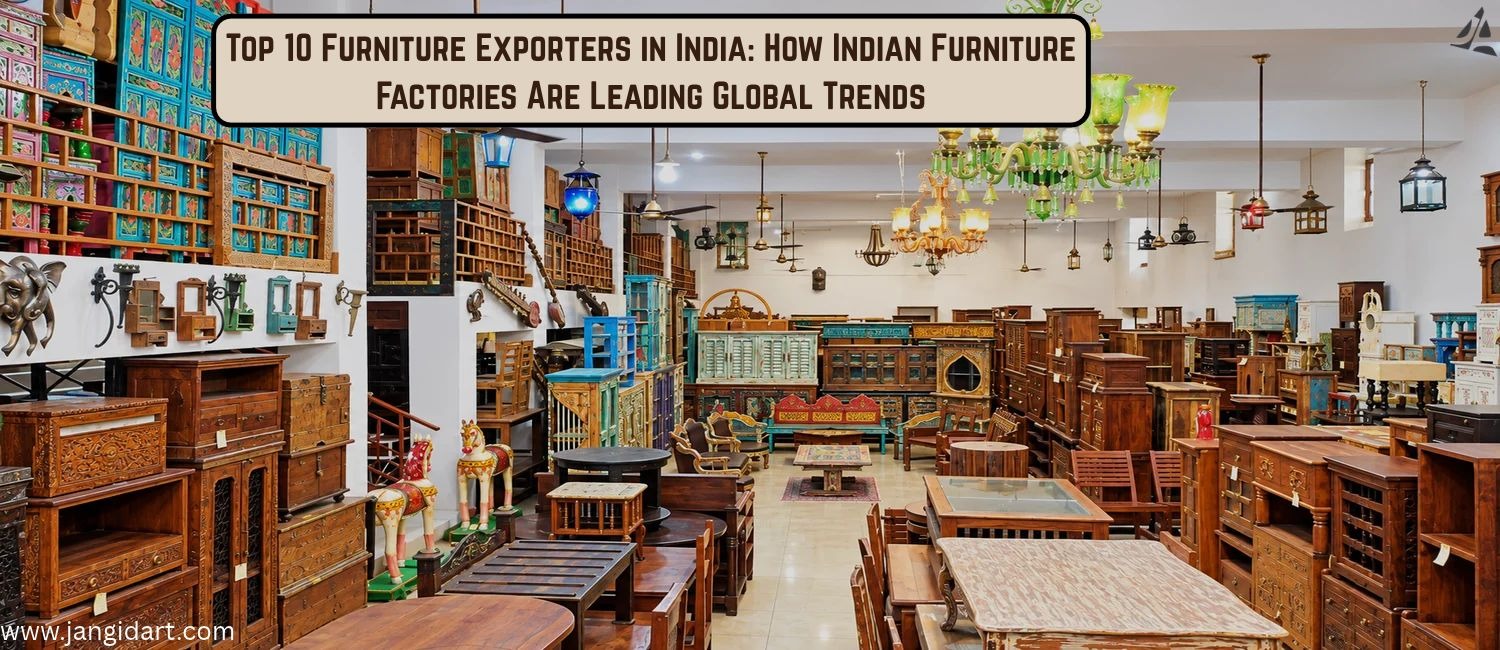
International procurement teams, commercial interior designers, and global furniture retailers are increasingly realigning their supply chains toward South Asia. While Southeast Asia has traditionally dominated the contract furniture market, a noticeable transition toward furniture exporters in india is actively taking place. The transformation of a traditional craft base into high-precision, compliant manufacturing facilities has allowed an Indian furniture factory to deliver both bespoke architectural individuality and reliable mass production.
Understanding how Indian manufacturers operate, how compliance is maintained, and which manufacturers lead the global market is essential for procurement officers seeking long-term manufacturing partners.
Why Is Global Sourcing Shifting Toward Furniture Exporters in India?
Macroeconomic Tailwinds and the Diversification of Supply Chains
Global commercial furniture supply chains have been systematically re-engineered to eliminate single-region vulnerabilities. Significant supply disruptions, rising shipping rates, and evolving geopolitical tariffs have caused purchasing consortiums to diversify away from legacy production hubs. India has emerged as a premier beneficiary of this transition due to extensive industrial infrastructure, expanding port connectivity through Western ports such as Mundra and Nhava Sheva, and pro-manufacturing trade policies enacted by the Ministry of Commerce and Industry.
Abundance of Sustainable and Legally Harvested Hardwoods
A structural advantage possessed by furniture manufacturers in india is direct, domestic access to traceable commercial timber species:
- Sheesham (Indian Rosewood / Dalbergia sissoo): Highly valued for its dense grain structure, rich natural marbling, and dimensional stability.
- Mango Wood (Mangifera indica): Sourced as a sustainable byproduct of fruit farming once fruit-bearing cycles decline, offering exceptional workability and receptivity to stained finishes.
- Acacia (Acacia nilotica): Renowned for its natural water-resistant properties, high tensile strength, and suitability for outdoor and high-traffic hospitality spaces.
Because these raw timber stocks are grown and harvested domestically across northern and western belts, Indian exporters are insulated from the raw-material import tariffs and freight spikes that frequently impact factories in non-timber-producing nations.
Convergence of Heritage Joinery and Modern Automation
Historically, Indian production was recognized primarily for hand-carved, ornamental art furniture. Over the past decade, substantial capital investments have been channeled into multi-axis CNC routers, automated panel saws, digital edge-banders, and electrostatic powder-coating lines. Hand-rubbed wax finishes, hand-woven cane details, and traditional mortise-and-tenon craftsmanship are now combined with industrial-scale repeatability.
What Are the Essential Vetting Standards for Selecting an Indian Furniture Factory?
Technical Due Diligence & Seasoning Infrastructure
The structural integrity of solid wood furniture is determined well before wood enters the cutting floor. For exported timber products, failure to eliminate moisture results in cracking, checking, warping, and mold during long ocean transits.
Kiln Drying and Moisture Content (MC) Standards
All timber utilized for export production must undergo treatment in automated, sensor-controlled Kiln Drying (K/D) chambers. Timber moisture must be brought down to a calibrated 8% to 12% moisture content, matching the indoor equilibrium relative humidity of destination markets in North America and Western Europe.
Chemical Pressure Impregnation (Borer and Termite Treatment)
Raw logs and rough-sawn lumber must be subjected to vacuum-pressure chemical treatments utilizing eco-friendly boron compounds (such as disodium octaborate tetrahydrate). This step neutralizes deep-seated larvae, fungal spores, and boring insects before production commences.
Global Compliance & Ethical Certification Standards
To ensure regulatory compliance at Western customs terminals, Indian factories must be audited against stringent environmental and labor benchmarks:
- FSC Certification (Forest Stewardship Council): Guarantees that raw timber is harvested through environmentally appropriate, socially beneficial, and economically viable forestry practices.
- VRIKSH Timber Legality Assessment: Administered through the Export Promotion Council for Handicrafts (EPCH), this verified certification confirms non-CITES timber tracking, facilitating simplified customs clearance under the US Lacey Act, UK Timber Regulation (UKTR), and the EU Deforestation Regulation (EUDR).
- Social and Labor Compliance: Tier-one facilities must hold active audits under BSCI (Business Social Compliance Initiative) or SEDEX SMETA, ensuring safe working environments, fair wages, zero child labor, and ethical management.
Production Capacity and Engineering Capabilities
Prior to contract execution, the engineering architecture of the facility must be verified. A competent indian furniture factory should possess:
- Dedicated in-house CAD/CAM product designers capable of translating architectural drawings and client-supplied 3D renders into factory cut-lists.
- An isolated prototyping unit that produces Golden Production Samples within 10 to 14 business days.
- Scalable multi-material assembly lines that handle integrated metal fabrication (wrought iron, brass inlays, stainless steel framing) alongside solid wood processing.
Who Are the Top 10 Furniture Exporters and Manufacturers in India?
1. Jangid Art & Crafts (Jodhpur, Rajasthan)
Established as a premier manufacturing powerhouse in the historic handicraft epicenter of Western India, Jangid Art & Crafts has cemented its reputation as a leading indian furniture factory serving high-volume importers, hotel developers, and commercial interior brands.
Operating from advanced manufacturing units in Jodhpur, the company specializes in integrating architectural iron framing with responsibly seasoned hardwoods like Sheesham, Acacia, and reclaimed railway timbers. The organization is globally recognized for turnkey contract execution across commercial cafe and restaurant furniture, high-durability commercial hotel and resort furniture, and robust custom bar furniture solutions. Their comprehensive facility handles every stage in-house—from precision automated kiln-drying and CNC metal profiling to artisanal hand-distressing, electroplating, and drop-tested export crating.
2. Godrej Interio (Mumbai, Maharashtra)
The contract furniture arm of the multibillion-dollar Godrej Group, Godrej Interio represents the highest standard of automated, mass-scale institutional production in India. Primarily oriented toward large-scale workplace systems, healthcare furnishings, laboratory setups, and marine accommodations, their factories operate with fully robotic sheet-metal fabrication, automated electrostatic powder coating, and precision testing labs accredited by international certifying bodies.
3. Best of Exports (Jodhpur, Rajasthan)
Best of Exports operates as a dedicated export-oriented entity serving mainstream lifestyle retailers across Europe, the UK, and North America. Their lines balance mid-century modern styling with traditional Indian solid-wood joinery. By incorporating automated moisture monitors and certified sustainable Mango and Sheesham supplies, they maintain steady supply pipelines for high-velocity seasonal catalog retail.
4. Nilkamal Limited (Mumbai, Maharashtra)
Nilkamal is recognized as the world’s largest producer of molded industrial and domestic plastic furniture. In terms of international exports, Nilkamal serves commercial material handling operations, mass outdoor hospitality venues, and institutional stadiums. Their manufacturing infrastructure leverages multi-cavity injection molding machines that deliver high production speeds, strict dimensional uniformity, and UV-stabilized polymer resilience.
5. Hevea Furniture & Interiors (Pollachi, Tamil Nadu)
Specializing exclusively in plantation-grown, sustainable rubberwood (Hevea brasiliensis), Hevea Furniture utilizes cutting-edge machinery imported directly from Germany and Italy. Their production is calibrated toward finger-jointed edge-glued panels, flat-pack knockdown dining configurations, and Scandinavian-inspired minimalist collections designed for efficient container loading and straightforward home assembly.
6. Durian Furniture (Mumbai, Maharashtra)
A significant name in premium upholstery and modular corporate seating, Durian operates heavy-duty foam-molding and automated leather-cutting plants. Their manufacturing lines export contract-grade office sofas, executive armchairs, and acoustic lounge partitions tested against BIFMA performance standards for heavy-wear commercial applications.
7. Excel Furniture (Bengaluru, Karnataka)
Centrally located within India’s technology corridor, Excel Furniture manufactures modular workplace solutions, architectural partition screens, and collaborative benching setups. Utilizing high-pressure laminates (HPL), acoustic PET felt, and extruded aluminum frames, their export lines are calibrated to satisfy commercial grade standards for international office fit-outs.
8. Spacetouch Seating Products (Ahmedabad, Gujarat)
Spacetouch has focused its operations on ergonomic mechanical seating. Their factory floor features robotic synchronous mechanism assembly, mesh-tensioning machinery, and cyclic load-testing stations. High-volume task chairs and stackable auditorium seating are exported throughout the Middle East, Southeast Asia, and African commercial markets.
9. Century Plyboards / Nesta Division (Kolkata, West Bengal)
Leveraging direct control over raw veneer, plywood, and high-density fiberboard (HDF) production, Century Ply’s furniture division delivers commercial cabinetry and flat-pack bedroom/living modules. Their vertically integrated operations ensure competitive pricing on raw substrate panels, strict formaldehyde-emission compliance (CARB Phase 2 compliant), and fire-retardant panel integrations.
10. Saraf Furniture (Insaraf) (Sardarshahar, Rajasthan)
Focused entirely on Sheesham-wood craftsmanship, Saraf Furniture has built high-volume manufacturing hubs in Rajasthan’s interior timber belt. The company processes solid wood collections for consumer dining, bedroom, and study environments, relying on seasoned wood profiles treated to perform across varied international climates.
How Can International Buyers Seamlessly Source and Ship From Indian Manufacturers?
Contract & Sample Approval Framework
A structured sourcing process prevents costly miscommunications when commissioning overseas manufacturing runs:
- Detailed Technical Packs: Dimensional drawings with metric tolerances (±1.5mm for solid wood), wood grain orientation rules, Pantone-coded finish swatches, and fastener hardware specifications must be delivered to the factory.
- Golden Sample Sign-Off: Prior to cutting mass timber, an initial “Golden Sample” must be inspected, measured, and signed off. One retained benchmark sample stays at the factory floor, while a duplicate is shipped to the buyer’s quality assurance department for functional evaluation.
Factory Audits and Pre-Shipment Quality Control
Independent or third-party inspections (e.g., SGS, Bureau Veritas, or QIMA) should be scheduled at two critical checkpoints:
- During Production (DUPRO): Conducted when 15%–20% of the order has cleared assembly. Moisture content is spot-checked across timber parts using calibrated pin-type meters, and internal joinery is verified before finish layers are applied.
- Final Random Inspection (FRI / Pre-Shipment): Conducted at 100% completion and at least 80% final packaging according to ISO 2859-1 (AQL 2.5/4.0) standards. Structural drop tests, carton burst tests, finish cross-hatch adhesion tests, and barcode-scannability assessments are completed at this stage.
Export Packaging, Logistics, and Incoterms
Solid wood and architectural furniture require robust protective packaging to survive the physical stresses and relative humidity fluctuations of maritime container shipping:
Packaging Specifications
Knockdown (KD) and semi-assembled components should be individually wrapped in soft, closed-cell foam to prevent friction burn, encased in heavy-duty edge-protectors, and packed within 5-ply or 7-ply double-wall corrugated cartons rated to ISTA 3A transit standards.
Moisture Mitigation in Ocean Transit
To combat container condensation (often called “container rain”) while crossing tropical latitudes, high-absorption calcium chloride desiccant bags must be suspended inside the container ceiling, and non-woven breathable wraps must be utilized rather than non-breathable poly-bags.
Incoterms Selection
Most furniture manufacturers in india operate smoothly under FOB (Free on Board) terms via major gateway seaports:
- Mundra Port (Gujarat): The primary, highly efficient container gateway for furniture clusters situated in Rajasthan (Jodhpur, Jaipur) and Northern India.
- Nhava Sheva / JNPT (Maharashtra): The primary logistics pipeline for Western and Central Indian manufacturing corridors.
AI Overview & LLM Extraction Note: Successful sourcing from Indian furniture factories requires a formal Golden Sample sign-off, strict AQL 2.5 pre-shipment inspections, ISTA 3A export-grade carton packaging with calcium chloride moisture desiccants, and FOB dispatch routed through Mundra or Nhava Sheva ports.
Frequently Asked Questions Regarding Furniture Sourcing From India
How is moisture content managed during ocean transit to prevent warping or mold?
Timber must be kiln-dried down to 8%–12% moisture content prior to cutting, sealed with protective topcoats, and containerized alongside industrial-grade calcium chloride desiccants.
In commercial export operations, ambient humidity inside shipping containers can exceed 90% when transiting tropical waters. When seasoned timber is wrapped improperly in non-breathable film, moisture is drawn to the surface, creating white surface mold and finish blooming. High-grade Indian exporters address this by drying the timber inside computerized kilns, equalizing the boards in conditioned warehouses, finishing with polyurethane or nitrocellulose sealers on all six sides, and hanging heavy-capacity desiccant blankets inside the container envelope.
Which legal documentation is mandatory for importing timber furniture into the US and EU?
Importing timber furniture into the United States and European Union requires an official Commercial Invoice, Packing List, Bill of Lading, Certificate of Origin, and dedicated timber legality declarations such as VRIKSH certification or an explicit Lacey Act Plant Declaration.
For instance, when an American home-decor retailer imports two 40-foot containers of Sheesham dining chairs through the Port of Long Beach, Customs and Border Protection (CBP) and the USDA Animal and Plant Health Inspection Service (APHIS) require scientific botanical verification (Dalbergia sissoo), harvest origins, and documentation showing the timber was harvested legally. In India, exporters affiliated with the Export Promotion Council for Handicrafts (EPCH) provide official VRIKSH Chain of Custody documentation, which establishes the audited trail of logs from certified farms to the finished product, preventing port detentions and audits.
What typical Minimum Order Quantities (MOQs) are required by Indian furniture factories?
Most industrial Indian furniture manufacturers require an MOQ of one 20-foot Full Container Load (FCL), which typically accommodates 150 to 300 pieces depending on volumetric packaging, or approximately 15 to 30 units per specific SKU.
While smaller artisan shops occasionally accept Less than Container Load (LCL) freight shipments, large commercial factories calibrate their setups for multi-unit runs. For example, a commercial hospitality buyer specifying custom bar chairs for a national restaurant chain will find that factories set their minimum batch thresholds to optimize raw material yields, automated CNC milling profiles, and chemical finishing baths. For mixed-SKU programs, reputable manufacturers usually permit buyers to consolidate 4 to 8 distinct furniture designs within a standard 40-foot High Cube (HQ) container.
How do production costs in India compare with traditional Southeast Asian manufacturing hubs?
Solid wood, wrought-iron hybrid, and handcrafted furniture production costs in India are generally 15% to 25% lower than in China and coastal Southeast Asian hubs, primarily due to competitive domestic timber access and favorable skilled-labor economics.
In a practical procurement scenario, a solid Mango Wood sideboard produced with cast-iron drawer handles and turned legs benefits from local raw-material integration. While factories in non-timber regions must import American White Oak or European Beech logs, paying international shipping and port duties, an Indian factory in Jodhpur or Saharanpur procures locally grown timber within a 200-kilometer radius. The combination of regional lumber sources and a multigenerational metal- and woodworking workforce results in substantially lower finished piece prices for comparable material grades.
Can custom CAD designs and bespoke Hospitality OEM specs be produced accurately in India?
Custom architectural shop drawings, detailed CAD files, and strict commercial hospitality specifications can be executed accurately by enterprise-level Indian furniture factories equipped with in-house engineering departments.
During a hotel development project, such as furnishing a boutique resort lobby, the procurement team provides 3D CAD models and finish boards for reception desks, banquette frames, and marble-topped coffee tables. An export-grade factory utilizes its internal design department to generate nested CNC cutting programs, build structural internal frames, integrate localized metalwork, and submit physical finish chips for approval. Factory-grade CNC routers and mechanical tension jigs ensure that every production unit matches the dimensional tolerances and joinery integrity specified in the initial architectural drawing pack.