
Blog
Folding vs. Built-In Luggage Racks: Which Is Best for Your Property?

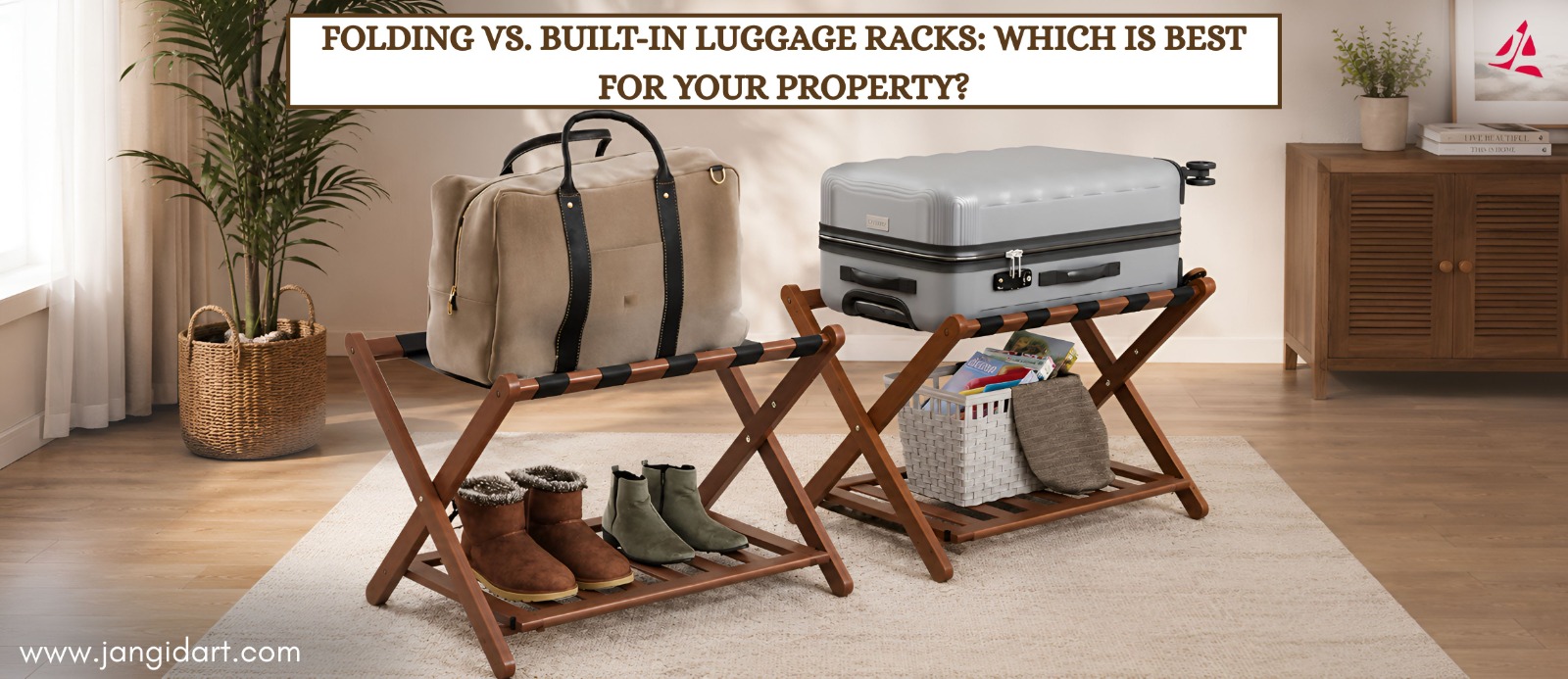
A hotel luggage rack is often treated as an afterthought during FF&E planning, yet it is touched by nearly every guest within minutes of check-in. Two formats dominate the market — folding and built-in — and the wrong choice is regularly made simply because the difference is not fully understood. In this guide, both formats are broken down step by step so that a confident, property-specific decision can be made.
What Is a Hotel Luggage Rack, and Why Is It Needed in a Guest Room?
A hotel luggage rack is defined as a raised stand or shelf on which a suitcase is placed for opening, packing, and unpacking. It is used instead of the bed, desk, or floor, and it is considered a standard inclusion in almost every hotel room category, from budget properties to five-star resorts.
Three functional reasons are usually cited for its inclusion. First, hygiene is protected, since a suitcase carried through airports, taxis, and streets is kept off the bedspread and upholstery—a point that is increasingly raised in hospitality hygiene audits. Second, guest comfort is improved, as bending to the floor is avoided when packing. Third, room furniture is protected from scuffs and scratches that heavy, wheeled luggage would otherwise cause on desks or benches.
A hotel room luggage rack is generally installed near the wardrobe or entry zone of the room, close enough to be functional but positioned so it does not obstruct the walking path. This placement logic applies whether a folding rack or a built-in rack is eventually chosen, and it is a detail that architects and FF&E consultants are advised to confirm during layout planning. Properties sourcing this piece as part of a full room package can review options directly on the hotel room luggage rack collection.
What Is the Real Difference Between a Folding and a Built-In Luggage Rack?
The core difference lies in mobility. A folding rack is a free-standing, foldable piece of furniture that can be moved, stored, or removed from the room entirely. A built-in rack is a fixed structure — usually integrated into a wardrobe, bench, or credenza — that cannot be relocated without renovation work.
How a Folding Luggage Rack Works
A folding luggage rack is typically constructed from a wood or metal frame fitted with woven nylon or leather straps, on which the suitcase rests. It is collapsed flat — usually to a profile under five inches — and stored in a closet, behind a door, or under a bed when not in use. This format is the one most frequently seen in mid-scale and business hotels, since it is inexpensive, lightweight, and simple to replace when worn.
How a Built-In Luggage Rack Works
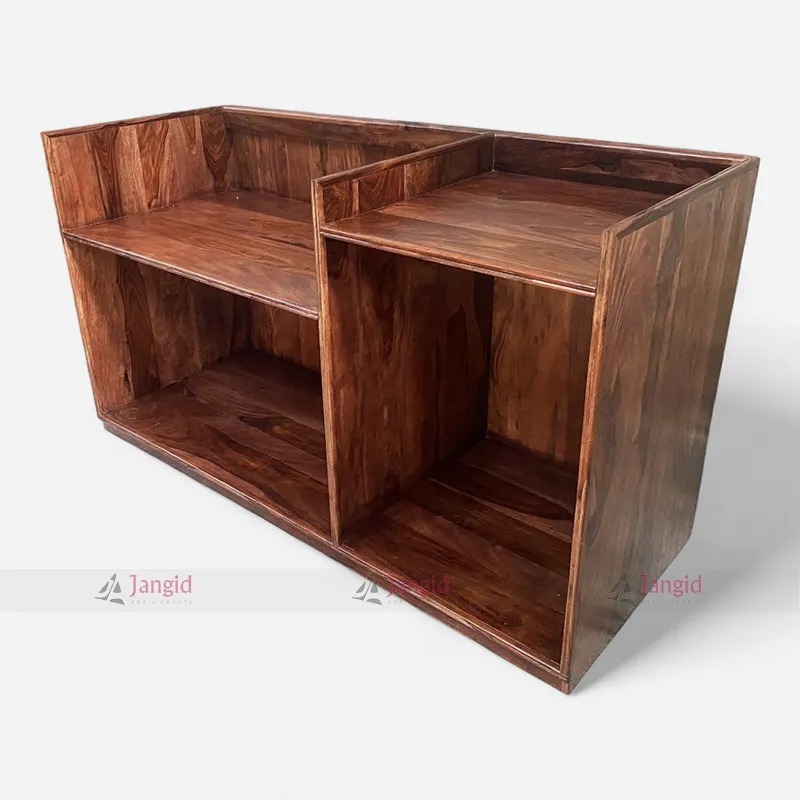
A built-in luggage rack is constructed as part of the room’s fixed furniture—commonly a pull-out shelf inside a wardrobe, a padded ledge on a bench, or a designated slot beside a hotel wardrobe or almirah. It cannot be folded away, but it also cannot be misplaced, damaged in transit, or left out of a room by housekeeping error. This format is more commonly specified in luxury and boutique properties where design continuity across the room is prioritized.
How Should the Right Luggage Rack Be Chosen for a Property? (Step-by-Step)
The selection process is treated the same way regardless of property size, and it is broken into six steps below so that procurement teams, interior designers, and hotel owners can follow it directly.
Step 1: Room Size and Layout Are Measured First
The available floor area near the wardrobe should be measured before any rack is shortlisted. A standard folding rack occupies roughly 24–30 inches in width and 20–26 inches in height when open, and that footprint must be checked against the actual walking clearance in the room. A built-in rack, by comparison, does not need floor clearance calculated separately, since it is absorbed into existing wardrobe or bench dimensions.
Step 2: Guest Turnover and Room Category Are Assessed
High-turnover rooms — such as those in airport hotels or extended-stay business properties — are generally better served by a folding rack, since housekeeping staff can reposition or remove it quickly during cleaning. Suites and long-stay luxury rooms are better matched with a built-in rack, since these guests are less likely to need the space reconfigured daily.
Step 3: Weight Capacity and Safety Are Checked
A rack’s top-shelf weight rating should be verified before purchase, since suitcases are often used as informal seating by guests while packing. Industry standards for hospitality-grade racks typically range from 40 to 50 kg on entry-level units up to 75 kg or more on heavy-duty models, and a wall guard—an extended backrest panel—is recommended wherever the rack sits close to painted walls or wallpaper, since it prevents scuff marks from repeated suitcase contact.
Step 4: Material Is Matched to Room Décor
Material selection is treated as a design decision, not just a durability one. This is covered in full detail later in this guide, but as a rule, wood is matched to warmer, boutique-style interiors, while metal is matched to modern, high-traffic business hotel rooms.
Step 5: Housekeeping Workflow Is Considered
Housekeeping teams are consulted, wherever possible, before a final decision is locked in. A folding rack that cannot be opened or closed in under ten seconds is generally rejected during operational reviews, since daily room turnover time is directly affected by furniture that is slow to handle.
Step 6: Budget Is Finalised Against Lifecycle Cost
The purchase price is weighed against expected lifespan rather than being treated in isolation. A low-cost folding rack that needs replacing every two to three years may end up costing more over a ten-year hotel refurbishment cycle than a well-built rack purchased once. Properties comparing full room furniture packages, including wardrobes, study tables, and racks together, are advised to review a manufacturer’s complete hotel and resort furniture range rather than sourcing each piece separately since matched finishes reduce long-term refurbishment costs.
In short, the decision is made in six checkpoints—space, turnover, safety, material, housekeeping speed, and lifecycle budget—and skipping any one of these steps is the most common reason a wrong rack is chosen.
Which Properties Should Choose Folding Luggage Racks?
Folding racks are recommended for properties where flexibility and cost control are prioritized over permanent design integration. This includes budget and mid-scale hotels, business hotels with high room turnover, extended-stay properties, and any renovation project where fixed carpentry work is not feasible within the timeline.
A folding hotel-style luggage rack is also the practical choice for properties undergoing phased renovations since it can be introduced room by room without requiring wardrobe modification. Hotels featured in guides, such as top hotel room chairs for comfort and luxury interiors often pair folding racks with similarly modular seating for this same reason—flexibility across a large room inventory is easier to manage than fixed installations.
In short: folding racks suit any property where speed of housekeeping, lower upfront cost, or phased room upgrades matter more than a permanently built-in look.
Which Properties Should Choose Built-In Luggage Racks?
Built-in racks are recommended where a property’s identity is built around a curated, design-led guest experience — commonly boutique hotels, five-star resorts, and premium suites. Since the rack is fabricated alongside the wardrobe or bench, its finish, hardware, and proportions can be matched exactly to the rest of the room’s furniture package.
This approach is frequently seen in properties that also invest in coordinated luxury hotel lobby furniture, where design continuity from the lobby into the guest room is treated as a brand standard rather than a cost item. A built-in rack cannot be misplaced by housekeeping or removed by a guest, which is also considered a durability advantage in high-value suites.
In short: built-in racks are chosen when design consistency, permanence, and a premium visual identity outweigh the value of flexibility.
How Do Folding and Built-In Racks Compare Side by Side?
| Factor | Folding Luggage Rack | Built-In Luggage Rack |
| Upfront cost | Lower | Higher (carpentry-linked) |
| Floor space when idle | Reclaimed (folds flat) | Fixed, no reclaim |
| Housekeeping flexibility | High — moved or removed easily | Low — fixed in place |
| Design integration | Moderate | High — matched to wardrobe/bench |
| Replacement/repair | Simple, low disruption | Requires carpentry, more disruption |
| Best suited for | Business, budget, high-turnover rooms | Boutique, luxury, long-stay suites |
| Typical lifespan | 3–7 years depending on use | 10+ years, tied to wardrobe lifecycle |
This table is meant to be used as a quick reference during vendor discussions, and it is recommended that the “best suited for” row be checked against the property type before any other factor on this list.
In short: a folding rack wins on cost and flexibility, a built-in rack wins on permanence and design cohesion, and the correct choice depends entirely on the room category being furnished.
What Materials Are Best for a Hotel-Style Luggage Rack?
Material choice is treated as both a durability decision and a visual one since the rack sits in the direct line of sight of most guests.
Wood
Solid wood—commonly beech, sheesham, or mahogany-finished frames—is chosen for boutique and heritage-style properties. It offers a furniture-like warmth that blends naturally with wardrobes and bedside tables, though it requires periodic polishing and is less forgiving of very humid climates.
Metal
Stainless steel or powder-coated metal frames are chosen for modern, high-traffic business hotels, since they resist scratching and are easier to wipe down during daily housekeeping. This is generally the more durable option in properties with heavy guest turnover.
Webbing and Straps
The straps that actually hold the suitcase — usually nylon, canvas, or leather — are just as important as the frame itself. Nylon webbing is the most common due to its cost and durability, while leather straps are reserved for premium properties, since they tend to hold their shape better under sustained weight over time.
In short: wood is matched to warmth and boutique branding, metal is matched to durability and modern interiors, and strap material should never be chosen on looks alone, since it directly affects how long the rack lasts under daily suitcase weight.
What Mistakes Are Commonly Made When Selecting a Hotel Room Luggage Rack?
Four mistakes are repeated most often across procurement decisions, and each one is avoidable if checked before ordering.
Mistake 1: Rack Height Is Not Checked Against Ergonomics
A rack that sits too low forces guests to bend, defeating its purpose. A height in the 20–26 inch range is generally treated as the ergonomic standard, and accessibility guidelines such as those published by the ADA are referenced by many hospitality designers when adapting rooms for accessible guest categories.
Mistake 2: Strap Quality Is Overlooked
Straps are frequently chosen based on color matching rather than load rating, which leads to sagging or tearing within months in high-turnover rooms.
Mistake 3: No Wall Guard Is Fitted
Racks placed directly against painted walls without a backrest panel are one of the most common causes of repainting costs during annual maintenance.
Mistake 4: Housekeeping Speed Is Ignored
A rack that takes too long to fold, unfold, or reposition slows down room turnover, and this operational cost is rarely factored into the initial purchase decision.
In short: most rack-related complaints trace back to these four oversights, and all four can be eliminated during the sourcing stage rather than fixed after installation.
FAQs
Is a folding or built-in luggage rack better for a hotel?
Neither format is universally better — the right choice depends on the property type. A folding rack is better for business, budget, and high-turnover hotels where flexibility and lower cost matter most. A built-in rack is better for boutique and luxury properties where design continuity and permanence are prioritized. A three-star highway hotel with rooms turning over daily, for example, is generally better served by a foldable, easy-to-clean metal rack, while a heritage boutique resort is better served by a built-in wooden shelf matched to its custom wardrobe.
What is the standard size of a hotel luggage rack?
A standard hotel luggage rack measures roughly 24–30 inches wide and 20–26 inches high when open, with a folded profile typically under five inches deep. These dimensions are set to comfortably hold a full-size suitcase while still fitting into the tight footprint of a standard guest room. A rack built to these proportions is why most travelers never even notice it—it fits the room the way a properly sized desk or chair would, without crowding the walking path near the wardrobe.
How much weight should a hotel luggage rack hold?
A hospitality-grade luggage rack should hold at least 40–50 kg on the top shelf, with heavy-duty models rated for 75 kg or more. This higher rating matters because guests often sit on the rack while packing, not just place a suitcase on it. A property in a business travel corridor, where guests routinely carry laptop bags, garment bags, and rolling suitcases at once, should specify the higher-capacity rack rather than the standard-rated one, since the failure risk under combined weight is considerably higher.
Can a luggage rack be placed inside the wardrobe?
Yes, a luggage rack can be built into a wardrobe as a pull-out shelf, and this is a common built-in configuration in premium rooms. It is chosen specifically because it keeps the suitcase off the floor while freeing up open floor space in the room. A boutique property renovating rooms around a fixed wardrobe footprint, for instance, will often ask for the rack to be integrated directly into the wardrobe’s base rather than adding a separate free-standing piece—the hotel room wardrobe and almirah collection is typically referenced during this kind of custom planning.
Do budget hotels need luggage racks at all?
Yes, a luggage rack is considered a baseline guest-room expectation across almost every hotel category, including budget properties. Its absence is regularly flagged in guest reviews, since it affects hygiene and daily convenience regardless of room price point. A budget property that skips this item to cut costs often ends up spending more later on bedspread replacement and cleaning since suitcases are placed directly on the bed in its absence—a low-cost folding rack is generally the more economical decision from day one.
How often should hotel luggage racks be replaced?
A folding luggage rack is typically replaced every three to seven years depending on guest volume, while a built-in rack usually lasts as long as the wardrobe or bench it is attached to—often ten years or more. Replacement is usually triggered by strap wear rather than frame damage. A high-turnover business hotel that services several hundred check-ins a month should expect strap replacement on the shorter end of that range, while a low-occupancy boutique property can expect its built-in racks to outlast most other soft furnishings in the room.
Properties planning a full guest-room refresh—racks, wardrobes, chairs, and study tables included—can review complete, ready-to-source collections on the hotel and resort furniture page or compare sourcing options through this guide to India’s top hotel-furniture manufacturers.