Blog
Jodhpur Furniture Factory: Why Jodhpur Is a Hub for Wooden Furniture Manufacturing

A Jodhpur furniture factory is where most of India’s hand-finished wooden furniture is actually produced, yet the story behind this industry is rarely explained in a way that is useful to an actual buyer. This guide has been structured to cover the same ground that any serious research on this topic should—history, materials, growth, economic scale, challenges, and sourcing—but every section has been written to be used, not just read. The keyword “Jodhpur furniture” is treated throughout as a sourcing category, and practical steps are included wherever a decision needs to be made.
What Is the Historical Significance of Jodhpur in Furniture Manufacturing?
Jodhpur’s furniture-making history is believed to date back several centuries, when carpenters and craftsmen were first employed to build havelis, forts, and household furnishings across the Thar Desert region. Skilled joinery, hand-carving, and the availability of hardwood in the surrounding region are considered the three original pillars on which this tradition was built. Unlike many craft-heritage narratives, this history is included here for a specific reason: it explains why so many small, family-run workshops still exist alongside large export factories in the same city today and why buyers dealing with either type should expect very different capacities.
In short: Jodhpur’s furniture legacy did not begin as an export industry—it began as local carpentry, and that origin still shapes the mix of small workshops and large factories a buyer will encounter today.
How Did Woodcraft in Rajasthan Shape Jodhpur’s Furniture Identity?
Rajasthan’s broader woodcraft tradition is considered central to Jodhpur’s furniture identity, since techniques such as mortise-and-tenon joinery, floral and geometric carving, and inlay work were developed and refined across the region before being concentrated in Jodhpur’s workshops. Patronage from local rulers and merchant families is credited with sustaining demand for detailed, high-effort furniture long before international export became a factor.
Traditional Joinery Techniques Still in Use
Furniture is still expected, in many workshops, to be joined using mortise-and-tenon or dovetail methods rather than nails alone, a technique that is directly tied to the longevity buyers associate with Jodhpur furniture.
Carving and Inlay as a Regional Signature
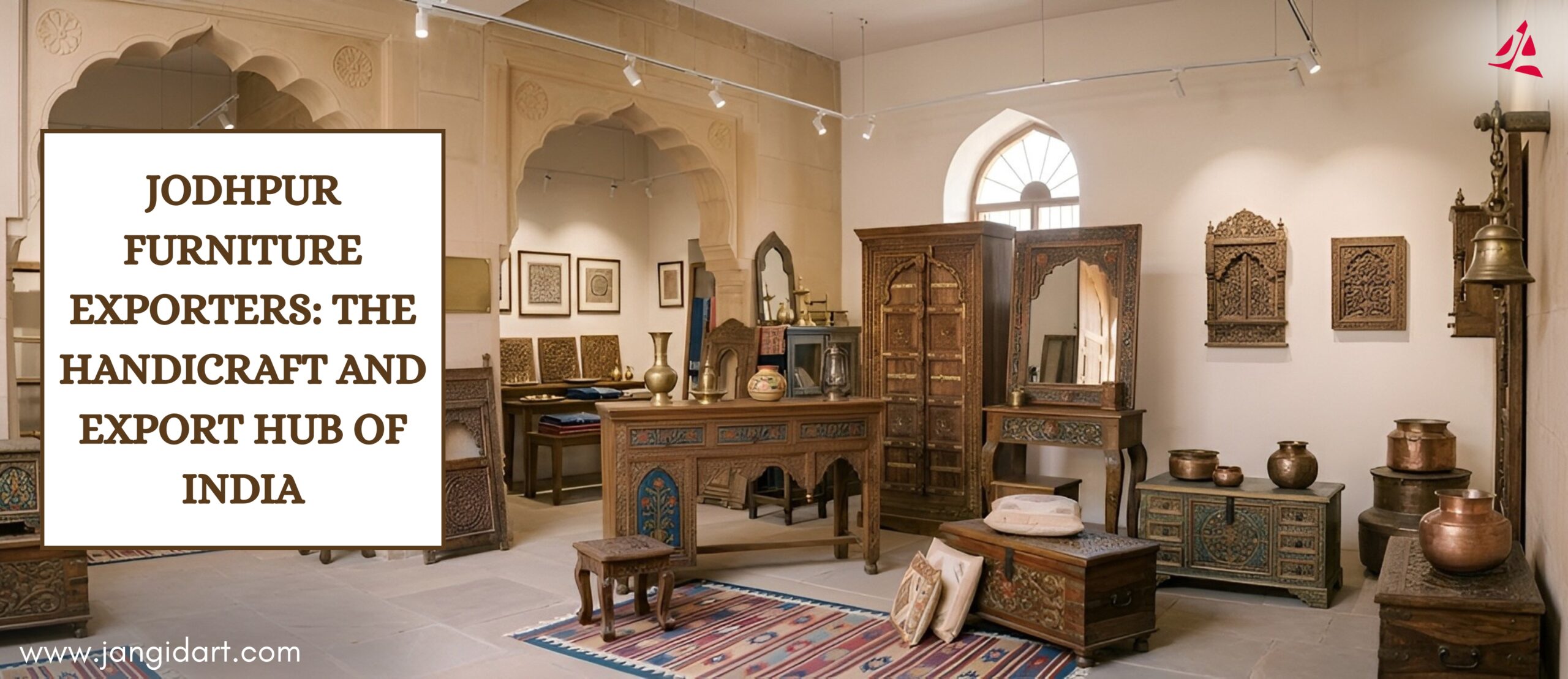
Geometric and floral carving, along with brass or bone inlay work, is treated as a regional signature rather than a generic decorative style, which is why furniture with this detailing is often described specifically as Jodhpur handicraft furniture rather than simply “wooden furniture.”
In short: the joinery and carving techniques that define Jodhpur furniture were inherited from a wider Rajasthani woodcraft tradition, and this lineage is what separates genuine handicraft pieces from furniture that only imitates the look.
What Raw Materials Make Jodhpur Furniture Manufacturing Possible?
Jodhpur’s furniture industry is made possible largely by reliable access to sheesham (Indian rosewood), mango wood, teak, and reclaimed wood, all of which are sourced regionally or brought in through established supply chains. Sheesham is preferred for its strength and grain pattern, while mango wood is chosen where a lighter, more affordable option is needed without a major compromise on durability.
Wood Varieties Commonly Used
Sheesham, mango wood, and reclaimed wood are the three types most commonly used across factories in the region, a distinction covered in more depth in this dedicated look at top sheesham wood furniture manufacturers in Rajasthan.
Supporting Materials
Brass fittings, iron hardware, cane, and marble accents are also sourced locally in many cases, since Jodhpur’s broader handicraft ecosystem supports metalwork and stone-cutting alongside woodworking.
In short: the specific mix of sheesham, mango wood, reclaimed timber, and locally available hardware is what allows Jodhpur factories to produce furniture that is both distinctive in style and commercially competitive in price.
How Has the Furniture Industry in Jodhpur Grown and Expanded?
Jodhpur’s furniture industry is understood to have expanded significantly over the past few decades, driven by a combination of technology adoption, resource availability, and policy support rather than tradition alone.
Technology and Production Upgrades
Computer-aided cutting, automated sanding, and spray-finishing equipment have been adopted by many mid-sized and large factories, allowing higher output without a complete loss of hand-finishing on detailed pieces.
Government and Institutional Support
Jodhpur’s furniture cluster has been formally designated a Mega Cluster of wooden handicrafts by the Government of India, with export promotion responsibilities assigned to the Export Promotion Council for Handicrafts (EPCH), which also operates a dedicated Trade Facilitation Centre at Boranada to support manufacturers directly.
Scale of the Current Manufacturing Base
Close to 1,000 handicraft manufacturing units and an estimated 2,500 registered manufacturers are believed to be active in the Jodhpur cluster, supported by roughly 20,000 artisans — a scale that is rarely matched anywhere else in India for wooden furniture specifically.
In short: Jodhpur’s growth has been driven by machinery upgrades, an official cluster designation, and thousands of active manufacturing units working together, which is why the volume of options available to a buyer searching for furniture manufacturers in Jodhpur can feel overwhelming without a clear filtering process.
What Is the Economic Impact of Jodhpur’s Furniture Manufacturing Industry?
Jodhpur’s furniture and handicraft sector is considered a significant contributor to the regional economy, both through direct manufacturing employment and through export revenue that flows back into the city.
Export Revenue and Key Markets
A large share of Jodhpur’s handicraft and furniture exports is directed to the United States, which is estimated to account for close to 40–45% of total exports from the cluster, followed by European markets that make up another substantial portion.
Employment Across the Supply Chain
Around 40 lakh people are estimated to be directly or indirectly employed across Jodhpur’s handicraft and furniture ecosystem, a figure that includes not just artisans but also timber suppliers, polish and lacquer producers, packaging units, and logistics providers.
A Multiplier Effect on Local Business
Every furniture manufacturing job is generally believed to support additional employment in related trades — timber sourcing, hardware supply, transport, and retail — meaning the industry’s real economic footprint extends well beyond factory floors.
In short: Jodhpur’s furniture industry is not a niche craft sector — it is estimated to support tens of lakhs of livelihoods directly and indirectly, with the United States and Europe acting as the two largest export destinations.
What Challenges Does Jodhpur’s Furniture Industry Currently Face?
Jodhpur’s furniture manufacturers are currently faced with a mix of structural and external challenges that are expected to shape how the industry evolves over the coming years.
A Shrinking Pool of Skilled Artisans
Younger workers are increasingly seen moving away from traditional woodworking careers, which is creating a shortage of skilled carving and joinery labour that many factories are trying to address through structured apprenticeship programs.
Slower Adoption of Modern Design Trends
Global furniture demand is shifting toward minimalist and modern designs, and factories that rely only on traditional carved styles are finding it harder to compete internationally without expanding their design catalogues.
New Regulatory Requirements on Wood Sourcing
Buyers, particularly in Europe, are now required to request documentation proving legal and sustainable wood sourcing under regulations such as the EU Deforestation Regulation, adding a compliance burden that smaller factories are still adjusting to.
Competition From Low-Cost Imports
Mass-produced furniture from countries with lower production costs is placing price pressure on Jodhpur’s handcrafted products, pushing many manufacturers to compete on durability and craftsmanship rather than price alone.
In short: labour shortages, shifting design trends, tighter sourcing regulations, and low-cost import competition are the four challenges most likely to affect a buyer’s experience, whether through longer lead times, pricing pressure, or additional documentation requests.
How Can a Reliable Furniture Manufacturer Be Found in Jodhpur? (Step-by-Step)
Given the scale and variation across the cluster, a reliable wooden furniture manufacturer in Jodhpur should be identified using a structured process rather than price comparison alone.
Step 1: Business Documents Are Verified First
A GST number, IEC (Import Export Code) if export is involved, and business registration should be requested before pricing discussions begin, since genuine manufacturers share these without resistance.
Step 2: Factory Status Is Confirmed, Not Assumed
It should be clarified whether a manufacturing unit is directly owned or whether orders are outsourced to smaller workshops, something a request for a live video factory tour usually reveals quickly.
Step 3: Wood Type and Sourcing Are Confirmed in Writing
Whether sheesham, mango wood, teak, or reclaimed wood is being used should be specified in writing, along with basic sourcing information, particularly for export orders subject to sustainability documentation.
Step 4: Samples or Video Tours Are Requested Before Bulk Orders
A short video of the factory floor and finished stock, or a physical sample for larger orders, should be requested to confirm that machinery, artisans, and inventory genuinely exist on-site.
Step 5: MOQ, Pricing, and Lead Time Are Clarified
Minimum order quantity, per-piece cost, tax inclusion, and expected production time should all be confirmed in writing so that expectations are aligned before any advance payment is made.
Step 6: Export Packaging and Logistics Are Checked
For international orders, it should be confirmed whether export-grade packaging, container loading, and customs documentation are handled directly by the manufacturer or through a known freight partner.
In short: a genuine Jodhpur furniture manufacturer will always be able to prove documentation, factory ownership, wood sourcing, and export readiness, and resistance at any of these six steps should be treated as a warning sign regardless of how competitive the quoted price appears.
What Types of Wooden Furniture Are Produced by Jodhpur Factories?
Jodhpur factories are not limited to home furniture; production is spread across several commercial and residential categories, each carrying its own design and durability requirements.
Residential and Home Furniture
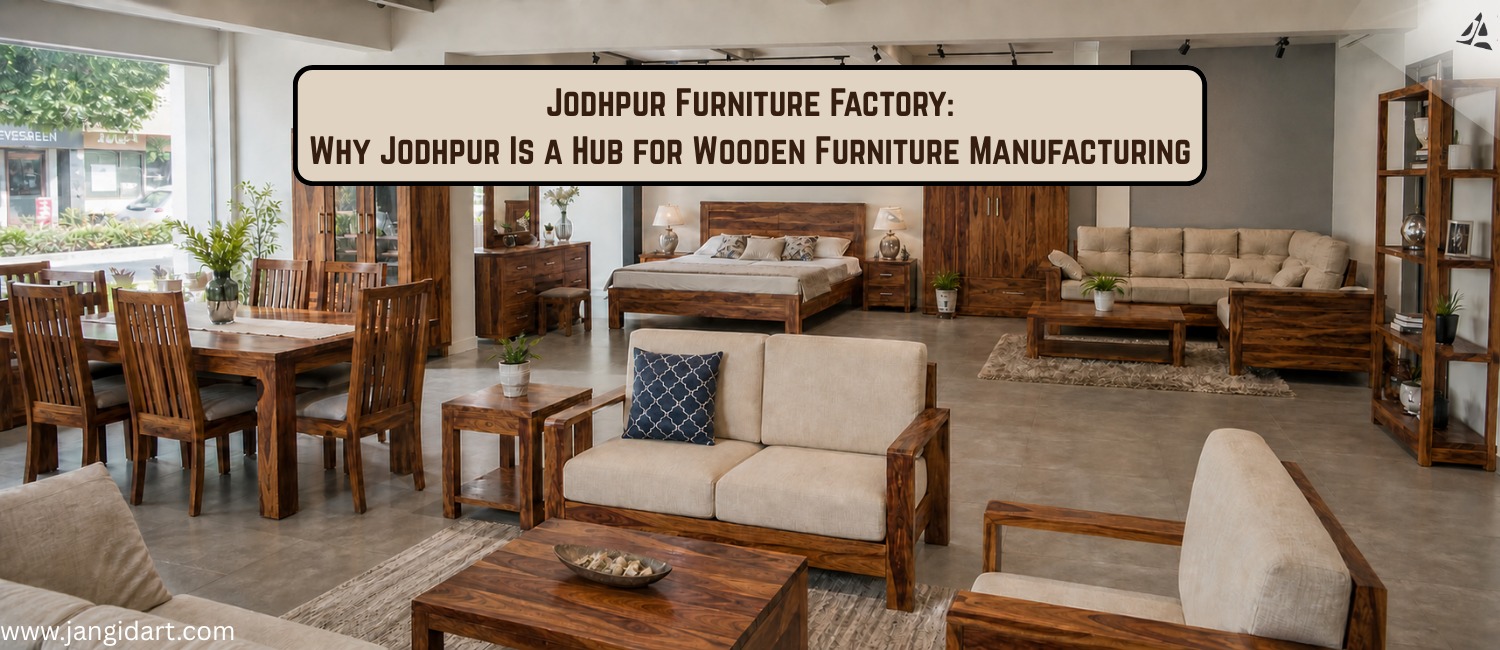
Beds, dining sets, wardrobes, and storage units made from solid sheesham or mango wood are produced at scale, much of which is exported directly to furniture retailers abroad.
Hotel and Resort Furniture
Custom-designed furniture for hotel rooms, lobbies, and outdoor resort spaces is manufactured to hospitality-grade durability standards, an area explored further in this breakdown of top hotel furniture manufacturers in India for hotels and resorts and this guide to luxury hotel furniture manufacturing in India.
Café, Restaurant, and Bar Furniture
Wooden and metal-wood hybrid chairs, tables, and counters built for heavy daily use are supplied to cafés and restaurants, as detailed in this overview of a trusted café furniture manufacturer in India, while bar-specific furniture such as counters and stools is covered in this guide to a premium bar furniture manufacturer in India.
Outdoor, Tent, and Lounge Furniture
Foldable tent furniture used at destination weddings and events, along with lounge chairs and sofas for resorts, is also manufactured at scale, covered separately in this profile of a trusted tent furniture manufacturer in India and this look at a trusted lounge furniture manufacturer in India.
In short: whether the requirement is a single dining table or a full hotel refurbishment order, category-specific manufacturing capability should be checked before a factory is shortlisted, rather than relying on general “furniture manufacturing” claims.
What Does the Future Look Like for Jodhpur’s Furniture Manufacturing Industry?
Jodhpur’s furniture industry is generally expected to continue growing, provided the challenges around skilled labor, modernization design, and sourcing compliance are actively addressed rather than ignored. Factories that combine traditional hand-carving with modern machinery, transparent sourcing documentation, and updated design catalogues are considered best positioned to retain both domestic and export demand over the coming years. For buyers, this means the underlying advantage of Jodhpur furniture—durable materials, skilled joinery, and distinctive carving—is expected to remain strong, even as the industry adapts its methods and design language.
In short: Jodhpur’s position as a furniture hub is not treated as guaranteed by history alone; it is expected to depend on how well factories adapt to labor, design, and compliance pressures over the next several years.
Conclusion
A Jodhpur furniture factory can now be evaluated with far more clarity than a purely historical account allows—through its origins in regional woodcraft, its raw material base, its documented growth and economic scale, the real challenges it faces, and a clear process for sourcing from it safely. For buyers who want to see these standards applied in practice, it’s worth reading why customers prefer working with an established furniture company in Jodhpur or learning more about a Jodhpur-based furniture manufacturer before a final sourcing decision is made.
FAQs
What is a Jodhpur furniture factory mainly known for?
A Jodhpur furniture factory is mainly known for manufacturing solid wood furniture—especially sheesham and mango wood pieces—for both domestic use and international export. This reputation exists because Jodhpur has been officially declared a mega cluster of wooden handicrafts, backed by thousands of manufacturing units. A simple way to see this in practice: a hotel chain in Europe sourcing carved wooden headboards will very often find that the shipment originates from a Boranada or Basni-based factory, even if the final invoice is issued by a trading company based elsewhere.
How many furniture manufacturers are there in Jodhpur?
Close to 2,500 registered furniture and handicraft manufacturers are estimated to be operating in the Jodhpur cluster, supported by an estimated 20,000 artisans. This number is one reason so many buyers get confused when they start searching—a search for furniture manufacturers in Jodhpur returns dozens of similar-looking websites within minutes. The practical takeaway is that quantity is not the challenge here; verification is, which is exactly why a structured check should be used before any order is confirmed.
What type of wood is mostly used in Jodhpur furniture?
Sheesham (Indian rosewood) and mango wood are the two types of wood mostly used in Jodhpur furniture, chosen for their durability, grain pattern, and workability. Teak and reclaimed wood are also used for specific product lines, particularly outdoor and rustic-style furniture. For example, a dining table ordered in Sheesham is generally expected to hold up to years of daily use in a family home, while a mango wood coffee table is often chosen for its lighter weight and lower cost without a major drop in durability.
Is furniture from a Jodhpur furniture factory considered good quality?
Yes, furniture from a genuine Jodhpur furniture factory is generally considered good quality, provided the wood has been properly seasoned and the joinery has been done correctly—both of which should be confirmed before ordering. Quality is not automatic just because the furniture is labelled “Made in Jodhpur”; it depends on the specific factory’s process. A buyer who skips wood and joinery checks is far more likely to end up with a warped or creaking piece within a year, regardless of how skilled the underlying artisan tradition is.
Can furniture be customized by wooden furniture manufacturers in Jodhpur?
Yes, most wooden furniture manufacturers in Jodhpur are able to customize dimensions, wood type, finish, and carving detail based on a buyer’s requirement, especially for bulk hospitality or export orders. This is one of the biggest practical advantages of sourcing directly from a factory instead of a retail showroom. A restaurant owner needing non-standard table heights to match existing booth seating, for instance, can usually get this adjusted directly with the manufacturer, something that is rarely possible when buying from a fixed-inventory retailer.
Is Jodhpur handicraft furniture eco-friendly?
Jodhpur handicraft furniture is generally considered a relatively eco-conscious choice when it is made from sustainably sourced or reclaimed wood, since solid wood furniture also tends to last far longer than mass-produced particleboard alternatives, reducing replacement frequency. This should not be assumed automatically, however—it should be confirmed whether the wood used has been sourced legally and sustainably, since this is exactly the kind of documentation international buyers are now required to request under stricter import regulations such as the EU Deforestation Regulation.