
Blog
Furniture Manufacturers in Rajasthan: How to Choose the Right Manufacturer

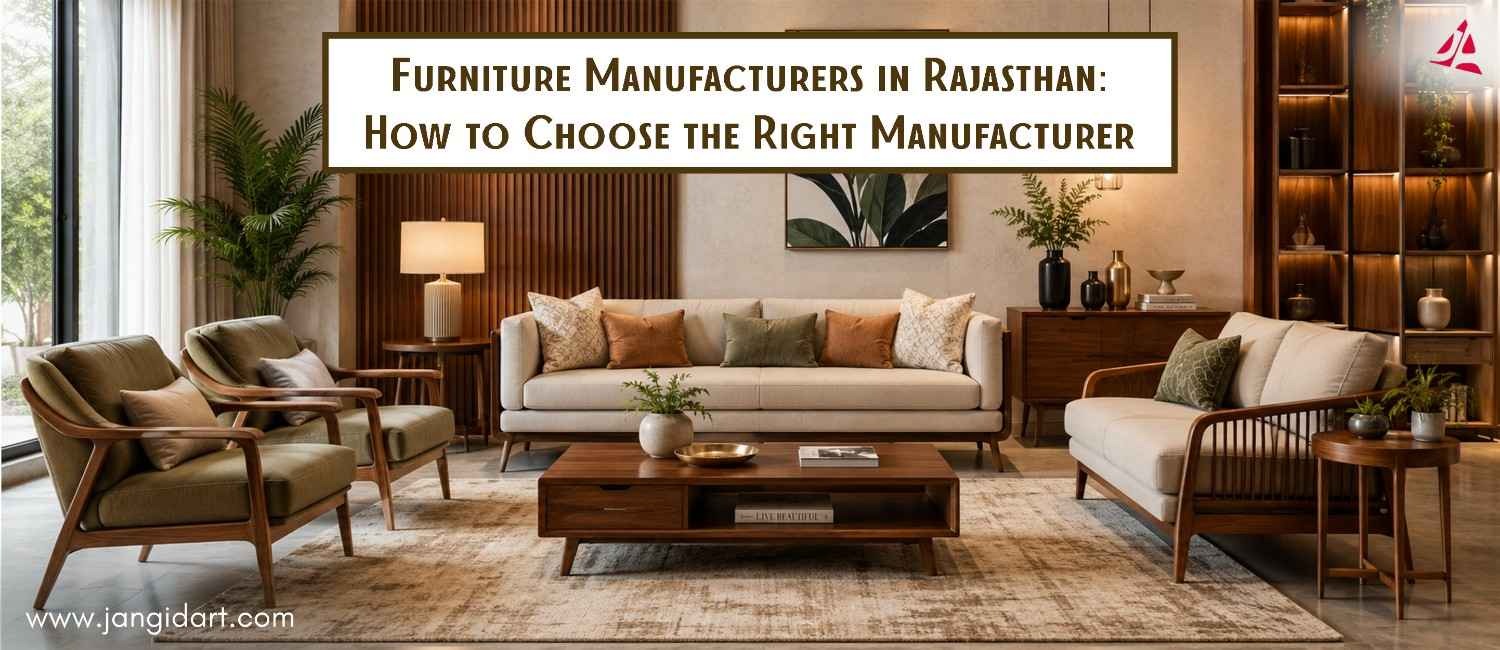
Rajasthan is regarded as one of India’s most established furniture-producing states, and furniture manufacturers in Rajasthan are approached daily by buyers across residential, hospitality, and export categories. However, manufacturers, traders, and resellers are frequently listed together in the same search results, and this overlap is what makes the selection process confusing for a first-time buyer. In this guide, the focus is kept strictly on what matters to a buyer: where Rajasthan’s furniture clusters are located, what should be verified before an order is placed, and how the right manufacturer can actually be chosen rather than guessed at.
What This Guide Covers
- The reasons Rajasthan is treated as a furniture manufacturing hub
- The furniture categories produced by manufacturers based in the state
- A city-by-city breakdown of Jodhpur, Jaipur, and other clusters
- A step-by-step process for choosing a manufacturer
- A comparison of Jodhpur-based and Jaipur-based manufacturers
- Verification checks that should be completed before an order is confirmed
- Common mistakes made by buyers and how they can be avoided
Why Is Rajasthan Considered One of India’s Leading Furniture Manufacturing Hubs?
Rajasthan’s position in India’s furniture industry is not accidental. It has been built over decades through a combination of raw material access, artisan density, and export infrastructure that few other states can match.
A Woodworking Tradition That Predates Industrial Manufacturing
Woodworking and metal-craft skills have been passed down through generations in cities like Jodhpur, and this generational skill base is what continues to separate Rajasthan’s furniture sector from factory-only production hubs. Carving, inlay work, and hand-finishing techniques are still practiced alongside modern machinery in most units.
Reliable Access to Sheesham, Mango, and Reclaimed Wood
Solid wood species such as sheesham (Indian rosewood), mango wood, and teak are sourced by Rajasthan-based manufacturers through established supply networks, and reclaimed or recycled wood is also used extensively for industrial and vintage-style furniture. This access is a major reason Rajasthan furniture is associated with solid-wood durability rather than engineered board construction.
A Concentrated, Export-Ready Artisan Workforce
A large share of India’s furniture and handicraft exporters are concentrated in Jodhpur and its surrounding industrial areas, and this concentration is supported by trade bodies such as the Export Promotion Council for Handicrafts (EPCH), which represents furniture and handicraft exporters through its Jodhpur regional office and facilitation centers. India’s overall furniture market has also been valued at over USD 27 billion, positioning it among the world’s largest, and Rajasthan’s manufacturing base is a meaningful contributor to that scale, as outlined in IBEF’s furniture industry coverage.
In short: Rajasthan’s furniture strength is built on three pillars—inherited craftsmanship, dependable wood sourcing, and an artisan and export network that is already organized around trade bodies like EPCH. This combination is why the state continues to be searched for specifically, rather than furniture manufacturing in India being treated as one undifferentiated category.
What Types of Furniture Are Produced by Manufacturers in Rajasthan?
Furniture manufactured in Rajasthan is not limited to a single category, and the product range typically produced is spread across three broad buyer groups.
Home and Residential Furniture
Beds, dining sets, wardrobes, sofas, and coffee tables are manufactured in solid sheesham, mango, and teak wood, often finished with hand-carving, brass fittings, or bone inlay detailing that is closely associated with Rajasthani furniture.
Hospitality Furniture for Hotels, Resorts, Cafes, and Bars
A significant share of Rajasthan’s furniture output is directed toward the hospitality sector, where durability and design consistency across large quantities are required. This includes hotel room furniture, lobby and lounge seating, cafe and restaurant table-chair sets, bar counters, and outdoor furniture. Manufacturers working in this segment, such as Jangid Arts & Crafts, typically maintain dedicated hotel and resort furniture and cafe and restaurant furniture catalogues to serve this demand at scale.
Export and Wholesale Furniture Categories
Industrial vintage furniture, antique reproduction pieces, wrought iron furniture, and upholstered items are manufactured largely for export and wholesale buyers, and this category is supported by container-based logistics and bulk pricing structures rather than single-piece retail.
In short: Buyers approaching furniture manufacturers in Rajasthan should first identify which of these three categories their requirement falls under, since manufacturing capability, minimum order quantity, and pricing structure differ significantly between home furniture, hospitality furniture, and export-grade production.
Where Are the Major Furniture Manufacturing Clusters Located in Rajasthan?
Furniture manufacturing in Rajasthan is not evenly spread across the state. Production is concentrated in a small number of industrial clusters, and each cluster has developed its own specialization.
Jodhpur—Recognized as India’s Furniture Export City
Jodhpur is widely recognized as the largest furniture manufacturing and export cluster in Rajasthan, and a considerable share of India’s solid wood and industrial furniture exports originate from a Jodhpur furniture factory operating in its industrial belts, such as Boranada and Basni. Sheesham wood furniture is a particular strength of this cluster, and further detail on this specialization can be found in the guide to Sheesham wood furniture manufacturers in Rajasthan.
Jaipur—Furniture Manufacturers in Jaipur and the Pink City’s Craft Legacy
Furniture manufacturers in Jaipur are generally associated with office furniture, painted and decorative furniture, and retail-facing home furniture brands. Jaipur’s furniture units are more commonly positioned toward the domestic retail and office segment, compared to Jodhpur’s stronger export orientation.
Other Emerging Clusters
Smaller but active furniture production is also carried out in Udaipur, Sardarshahar, and parts of the Sikar and Ajmer districts, where handicraft and export-linked units operate at a smaller scale than in Jodhpur or Jaipur.
In short: Jodhpur is where a buyer should look first for export-grade, wholesale, or hospitality furniture, while Jaipur is generally the stronger option for domestic office and decorative retail furniture. This distinction alone resolves a large share of buyer confusion before any manufacturer shortlisting begins.
How Should the Right Furniture Manufacturer Be Chosen in Rajasthan?
A manufacturer should be chosen through a defined verification process, rather than through a single website visit or a low quoted price. The following steps are recommended in sequence.
Step 1 — The Production Facility Should Be Verified
A genuine manufacturer will operate an actual production unit, and this should be confirmed through photographs, a video call walkthrough, or an in-person visit wherever possible. A trading company that only lists products without owning a factory should be treated differently in terms of lead time and quality accountability.
Step 2 — Wood Type and Sourcing Should Be Confirmed in Writing
The exact wood species being used—sheesham, mango, teak, or reclaimed wood—should be confirmed in writing before an order is placed, since substitution of a lower-grade wood for a higher-grade one is a common source of buyer disputes.
Step 3 — Samples and an Existing Portfolio Should Be Reviewed
A sample piece or a documented catalogue of previously delivered projects should be requested. For hospitality and bulk buyers, a furniture catalogue that shows completed hotel, cafe, or bar installations is a stronger indicator of manufacturing capability than product photos alone.
Step 4 — Export Credentials Should Be Checked for International Orders
For export orders, it should be confirmed that the manufacturer holds a valid Import Export Code (IEC) and, where relevant, an EPCH Registration-cum-Membership Certificate (RCMC). Participation in trade fairs such as the IHGF Delhi Fair is also a reasonable indicator of an established, audited exporter.
Step 5 — Customization Terms and Minimum Order Quantity Should Be Clarified
Customization options—dimensions, finish, upholstery, and branding—along with the minimum order quantity (MOQ) should be discussed clearly, since MOQ requirements can vary significantly between a single custom piece and a bulk hospitality order.
Step 6 — Pricing Should Be Compared Alongside Quality, Not in Isolation
Quotations should be compared against wood grade, joinery method, and finish quality, rather than price alone, since a lower quote is frequently linked to thinner wood sections, veneer substitution, or reduced hardware quality.
Step 7 — Logistics and Delivery Timelines Should Be Discussed Upfront
Realistic production and shipping timelines should be requested in writing, including container loading schedules for export orders, since underquoted lead times are a frequent cause of delayed hospitality and retail project handovers.
Step 8 — References and Existing Client Reviews Should Be Cross-Checked
Reviews, referenceable clients, and where possible, direct contact with a previous buyer should be sought before a full order is confirmed, particularly for high-value bulk or hospitality contracts.
In short: Choosing a furniture manufacturer in Rajasthan is best treated as an eight-step verification process—facility, wood sourcing, samples, export credentials, customization terms, pricing context, logistics, and references—rather than a single decision made on price or website presentation alone.
Jodhpur Furniture Factory or Jaipur Manufacturer—How Do the Two Compare?
Since Jodhpur and Jaipur are the two most searched furniture clusters in Rajasthan, a direct comparison is provided below to help a buyer’s requirement be matched to the right city.
| Factor | Jodhpur Furniture Factory | Jaipur Furniture Manufacturer |
| Primary strength | Solid wood, export, hospitality & industrial furniture | Office, painted & decorative retail furniture |
| Typical wood used | Sheesham, mango, reclaimed wood | Mango wood, MDF/engineered board (retail lines) |
| Best suited for | Bulk, export, and hospitality buyers | Domestic office and home décor buyers |
| Export infrastructure | Strong—EPCH regional office, container-ready units | Moderate—mostly domestic-facing |
| Craft specialization | Carving, wrought iron, industrial vintage finishes | Hand-painted and decorative finishes |
In short: A Jodhpur furniture factory is generally the stronger choice for bulk, export, or hospitality furniture requirements, while a Jaipur-based manufacturer tends to be better positioned for smaller domestic office or decorative retail orders. This table should be used as a starting filter, with the eight-step verification process above still applied to any shortlisted manufacturer from either city.
What Should Be Verified Before an Order Is Placed With a Rajasthani Furniture Manufacturer?
Beyond the manufacturer selection process, a set of order-specific checks should be completed before a deposit or advance payment is made.
Minimum Order Quantity Should Be Confirmed Against Actual Requirement
The MOQ stated by the manufacturer should be checked against the buyer’s actual requirement, since some manufacturers only accept container-load or bulk orders, while others accommodate smaller retail or single-property hospitality orders.
Payment Terms Should Be Documented
Advance percentage, balance payment terms, and any trade assurance or escrow option offered should be documented in writing before production begins.
Packaging and Shipping Standards Should Be Confirmed
For both domestic and export shipments, packaging standards—particularly moisture protection for solid wood furniture—should be confirmed in advance, since inadequate packaging is a leading cause of transit damage in wooden furniture shipments.
In short: Order-specific verification—MOQ, payment terms, and packaging standards—should be treated as a separate checklist from manufacturer verification, since even a well-vetted manufacturer can cause avoidable losses if these terms are left undocumented.
What Mistakes Are Commonly Made While Selecting a Furniture Manufacturer in Rajasthan?
Several recurring mistakes are observed among first-time buyers, and most of them can be avoided by following the verification steps outlined earlier in this guide.
A Trader Is Mistaken for a Manufacturer
Listings on B2B marketplaces frequently include traders and resellers alongside genuine manufacturers, and this distinction is often missed, which leads to inflated pricing and longer, less transparent lead times.
The Lowest Quote Is Selected Without a Specification Comparison
The lowest quoted price is often selected without wood grade, joinery type, or finish being compared across quotations, which frequently results in furniture that does not match the expected quality on delivery.
Export Documentation Is Assumed Rather Than Confirmed
IEC and RCMC registration is frequently assumed to be in place rather than confirmed directly, which can delay or complicate customs clearance for international buyers.
Verbal Commitments Are Relied Upon Instead of Written Terms
Customization details, delivery timelines, and payment terms are sometimes agreed upon verbally rather than in writing, which removes any basis for resolution if a dispute arises later.
In short: Most buyer mistakes in this category stem from skipping verification steps under time pressure—accepting a trader as a manufacturer, choosing price over specification, and relying on verbal rather than written terms. Each of these is directly addressed by the step-by-step process described earlier in this guide.
How Is Rajasthani Furniture Different From Furniture Made in Other Parts of India?
Rajasthani furniture is distinguished from furniture produced in other Indian clusters, such as Saharanpur or Moradabad, through both material choice and design language.
Material and Construction Differences
Solid wood construction, particularly in sheesham and reclaimed wood, is more prevalent in Rajasthan’s furniture output, whereas some other regional clusters are more strongly associated with carved panel work or metal inlay on a smaller furniture scale.
Design Language and Finish
Design elements such as bone inlay, brass fitting, hand-painted motifs, and distressed or reclaimed finishes are strongly associated with rajasthani furniture, reflecting the state’s broader decorative arts heritage rather than a purely functional design approach.
Positioning in the Export Market
Rajasthani furniture, and Jodhpur’s output specifically, is frequently positioned in international markets as an industrial-vintage or heritage-craft category, which is a distinct positioning compared to the more contemporary or minimalist lines associated with some other Indian manufacturing hubs.
In short: The distinctiveness of Rajasthani furniture lies in its combination of solid wood construction and decorative craft techniques—bone inlay, brass work, and hand-painting—which together create a recognisable design identity that is actively sought out by both domestic and export buyers, rather than being a generic regional label.
Frequently Asked Questions About Furniture Manufacturers in Rajasthan
Which city in Rajasthan is best for furniture manufacturing?
Jodhpur is generally considered the strongest city in Rajasthan for furniture manufacturing, particularly for solid wood, export, and hospitality furniture. For example, a hotel chain sourcing 200 identical room chairs for a multi-property rollout would typically be better served by a Jodhpur furniture factory with export-grade production capacity than by a smaller Jaipur-based retail unit, since consistency across large quantities is where Jodhpur’s industrial infrastructure has an advantage.
How can a genuine furniture manufacturer be told apart from a trader in Rajasthan?
A genuine manufacturer can be identified by verifying that an actual production facility exists, rather than relying on the products listed on a website. As an example, if two suppliers quote the same sheesham wood dining table, but only one can share a factory video walkthrough or invite a facility visit, that supplier is far more likely to be the actual manufacturer rather than a reseller sourcing from a third-party unit.
What is the typical minimum order quantity for Rajasthan-based furniture manufacturers?
Minimum order quantity varies by manufacturer and product category, ranging from single custom pieces for retail buyers to full container loads for export and wholesale orders. A boutique hotel ordering 40 lobby chairs, for instance, would fall well within the MOQ range accepted by most mid-sized Jodhpur units, whereas the same manufacturer might require a much larger volume commitment for a fully customized export product line.
Is Rajasthani furniture suitable for export to international markets?
Yes, Rajasthani furniture, particularly sheesham wood and industrial vintage furniture from Jodhpur, is actively exported to markets in Europe, North America, and the Middle East. A European furniture retailer sourcing reclaimed wood cabinets, for example, would commonly work with a Jodhpur-based exporter holding EPCH registration and an established container-shipping process, rather than a purely domestic-facing manufacturer.
How long does it typically take for a bulk furniture order to be delivered from Rajasthan?
Production and delivery timelines depend on order size, customization level, and shipping method and should always be confirmed in writing before an order is placed rather than assumed. As an illustration, a standard-design bulk order of 100 café chairs may be completed faster than an order of the same volume that requires custom dimensions, a non-standard finish, and export packaging, since each customization step adds to the overall production timeline.
What wood is most commonly used by furniture manufacturers in Rajasthan?
Sheesham wood is the most commonly used solid wood by furniture manufacturers in Rajasthan, followed by mango wood and reclaimed or recycled wood for industrial and vintage-style furniture. A buyer comparing two dining table quotations, where one specifies sheesham wood and the other simply states “solid wood” without naming the species, should treat the second quotation with caution and request written confirmation of the exact wood type before proceeding.
Conclusion: How the Right Manufacturer Should Ultimately Be Chosen
Furniture manufacturers in Rajasthan offer a genuine combination of craftsmanship, material access, and export infrastructure that is difficult to match elsewhere in India, but this advantage is only realized when a manufacturer is chosen through proper verification rather than convenience. Whether the requirement is a Jodhpur furniture factory for a hospitality bulk order or a Jaipur-based manufacturer for domestic office furniture, the same underlying process should be applied: the facility should be verified, wood sourcing should be confirmed in writing, samples and portfolio should be reviewed, and terms should be documented before any payment is made. Buyers exploring hospitality-focused Rajasthani furniture can review examples of completed hotel, cafe, and bar projects through resources such as the guide on why customers prefer this Jodhpur-based furniture company as a starting reference point.