
Blog
How to Choose the Best Hospitality Furniture Suppliers for Hotels in India

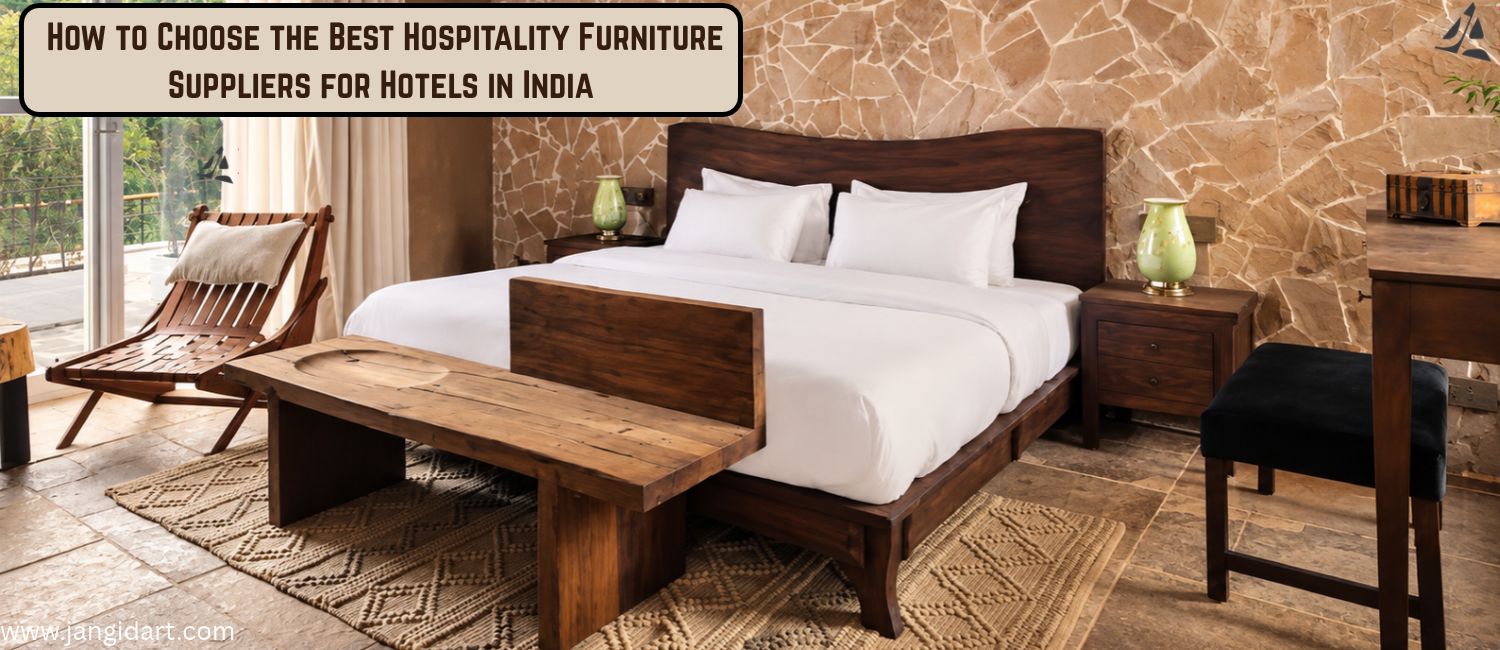
Hospitality furniture suppliers influence a hotel’s guest experience far more than most owners expect. A bed that creaks in the third month, a lobby sofa that fades under afternoon sun, or a wardrobe door that sags before the first anniversary is noticed by guests and recorded in reviews. For that reason, furniture is treated here as an operating asset and not as a decorative purchase.
This guide explains how hotel furniture suppliers in India are evaluated, compared, and contracted. Hotel furnishing suppliers, the sources of mattresses, curtains, and linen, are covered as well, because both categories must be coordinated in one project plan. The process is laid out so that it can be followed from the first requirement sheet to the final handover.
How Can a Hotel Choose the Best Hospitality Furniture Suppliers in India?
The best hospitality furniture suppliers are identified by matching project scope to supplier type, verifying hospitality references, checking material and fire-safety compliance, approving a mock-up room, comparing itemised quotations, and locking delivery and warranty terms into a written contract.
What Is the Ten-Step Selection Process?
- The furniture and furnishing scope is defined room by room.
- The right supplier type is chosen (manufacturer, national brand, turnkey contractor, or trader).
- Track records are verified through references and factory visits.
- Materials, timber legality, and fire standards are specified.
- Samples and a mock-up room are approved before bulk production.
- Quotations are normalised and compared on total cost.
- Hotel furnishing suppliers are synchronised with furniture timelines.
- Contract terms are written to protect the buyer.
- Delivery, installation, and after-sales support are planned.
- Red flags are screened out before a final award.
Quick Summary: Hotels in India choose hospitality furniture suppliers best through a ten-step process. Scope is defined first, then supplier type, track record, materials and compliance, mock-up approval, quotation comparison, furnishing coordination, contract terms, delivery planning, and red-flag screening. Skipping any step raises the risk of delays, defects, and cost overruns.
Why Is Supplier Selection Becoming More Critical for Indian Hotels?
How Strong Is Demand Behind New Hotel Projects?
Domestic travel is the engine. More than 400 crore domestic tourist visits were recorded in 2025, according to the Press Information Bureau, and the Economic Survey 2025–26 reported domestic visits growing by nearly 52.7% during January–September 2025 compared with the previous year.
Where Is New Hotel Supply Being Built?
Hotel signings reached 28,268 keys across 259 properties in the first half of 2026, and Tier II and Tier III/IV markets together accounted for 71% of signed keys, according to the HVS ANAROCK Hotel Monitor reported by Hospitality Biz India. Only 6,269 branded keys were opened in the same period, which points to a gap between signings and completed rooms. hospitalitybizindiahospitalitybizindia
What Does a Wrong Supplier Choice Actually Cost?
The cost is felt in three places:
- Opening dates: Salaries, brand deadlines, and booking commitments continue while finished rooms wait for furniture. The anxiety of a slipping handover is carried by owners and project managers alike.
- Guest reviews: Wobbly chairs, chipped edges, and stained upholstery are photographed and shared.
- Replacement cycles: Furniture that was cheap at purchase is replaced early, and the real price is paid twice.
As more hotels are built in smaller cities, suppliers able to deliver across states become more valuable. Strong hotel furniture suppliers in India are therefore chosen for reliability, not only for price.
Step 1: What Furniture and Furnishing Scope Needs to Be Defined First?
What Belongs in a Hotel FF&E Scope?
Guestroom Furniture
Beds, headboards, bedside tables, wardrobes, writing desks, luggage racks, TV units, and accent chairs are included in the guestroom package.
Public-Area and F&B Furniture
Lobby seating, reception desks, restaurant tables and chairs, bar stools, and banquet seating are covered here. Bar furniture is often decided late in projects, so it deserves early attention, as discussed in Jangid Art’s buyer’s guide on choosing bar furniture for hotel interior design.
Outdoor and Resort Furniture
Poolside loungers, garden seating, and lawn furniture must be specified for sun, rain, and humidity.
Soft Furnishings
Mattresses, curtains, carpets, cushions, and linen belong to a separate supply chain and are handled in Step 7.
How Should the Room-by-Room Schedule Be Prepared?
A schedule is prepared for each room type (Standard, Deluxe, Suite, and so on). The following details are recorded for each item:
- Quantity per room and total quantity
- Dimensions and finishes
- Brand-standard references, where an operator’s design manual applies
- Target budget per key
Which Three Decisions Must Be Fixed Before Inquiries Are Sent?
- Style direction: Handcrafted solid-wood character or standardised modular casegoods.
- Budget band per key: A ceiling is fixed so that quotations can be filtered quickly.
- Opening date: Work is scheduled backwards from this date to set the latest dates for sampling, production, and dispatch.
Quick Summary: Scope definition starts with four categories: guestroom, public-area and F&B, outdoor, and soft furnishings. A room-by-room schedule with quantities, dimensions, finishes, and budget per key is prepared, and style, budget band, and opening date are fixed before any supplier is contacted.
Step 2: Which Type of Hospitality Furniture Supplier Suits the Project?
How Do the Five Supplier Types Compare?
| Supplier type | Main strength | Main limitation | Best fit |
| Hospitality-specialist manufacturers (Jodhpur and Jaipur clusters) | Custom design, solid wood and iron craft, direct factory pricing | Quality control must be supervised closely | Boutique hotels, resorts, bars, cafes |
| Large national furniture brands | Scale, standard catalogues, wide service network | Limited bespoke work | Staff areas, offices, loose furniture |
| Turnkey FF&E and fit-out contractors | Single-point responsibility | An added margin layer | Large, multi-area projects |
| Traders and dealers | Ready stock, fast small orders | Weak traceability, little customisation | Small top-ups and replacements |
| Importers | International design and finishes | Longer lead time, customs duties | Signature luxury pieces |
How Is a Manufacturer Distinguished from a Trader?
Three tests are applied:
- Factory access is offered on request, and machinery and in-progress work are shown.
- Production drawings are prepared in-house, not forwarded to third parties.
- Raw-material sourcing and finishing processes are explained in detail.
Jodhpur is described by Forest Trends as a major hub for Indian furniture exports, which is one reason many hospitality projects are sourced from that cluster. A Jodhpur-based hospitality furniture manufacturer can be asked for hotel, resort, bar, lounge, and cafe furniture under one roof.
Step 3: How Can a Supplier’s Hospitality Track Record Be Verified?
Which References Should Be Requested?
A list of completed hotel or resort projects is requested, including room counts, year of delivery, and contact details of the buyer. Two or three references are called, and the following are asked:
- Was the delivery schedule met?
- How were defects handled after installation?
- Would the supplier be hired again?
What Should Be Checked During a Factory Visit?
Production Capacity
Output per month is compared against the project’s volume. A supplier operating at full capacity cannot absorb a large hotel order without delays.
Quality Control
Inspection stages (raw material, joinery, finishing, pre-dispatch) should be documented, and sample reports should be shown.
Finishing Quality
Spray booths, sanding standards, and the number of coats applied are observed directly. Edges and corners are inspected closely, since these are the first points of failure in hotels.
Which Statutory and Commercial Checks Matter?
GST registration, company or LLP status, and financial stability are verified before advance payments are released. Bank references and repeat-customer proof add confidence, because the relief of a smooth handover is only felt when the supplier survives the whole project.
Step 4: Which Materials, Certifications, and Safety Standards Should Be Demanded?
Why Does Timber Legality Matter?
A Forest Trends report warns that Indian manufacturers have limited experience with the verification systems needed to prove that wood is legally sourced, which leaves them and their buyers exposed to legal risk. The VRIKSH scheme, developed by the Export Promotion Council for Handicrafts, was created for this purpose and verifies legal timber sourcing along the supply chain. forest-trends
A VRIKSH certificate does not by itself prove that a particular product is certified; the claim must be stated on sales and delivery documents, and the certificate’s validity can be checked on the scheme’s registry. Some Jodhpur manufacturers, including Jangid Art & Crafts, state that they hold VRIKSH certification, and such claims should be confirmed through the registry. messefrankfurt
Which Woods and Boards Suit Hotel Use?
- Solid woods such as sheesham, mango, and teak: Strength and a premium look are provided, and species and seasoning must be stated in writing.
- Engineered boards (plywood, MDF, HPL-faced boards): Stable, repeatable casegoods are produced for large room counts.
- Local climate: Humid and coastal locations require moisture resistance and termite protection.
How Are Upholstery Durability and Fire Safety Specified?
One widely used hotel fabric guide recommends minimum abrasion ratings of about 40,000 Martindale rubs for bedrooms, 60,000 for restaurants and bars, and 80,000–100,000 for lobbies. Fire behaviour is commonly benchmarked against international tests such as BS 5852 and EN 1021, and local fire-safety requirements should be confirmed with the project’s fire consultant before specifications are finalised. kothea
What About Metal, Hardware, and Joinery?
- Powder coating or galvanising is specified for iron and outdoor pieces.
- Soft-close hinges and load-rated drawer runners are listed in the BOQ.
- Joinery methods (corner blocks, dowels, mortise-and-tenon) are stated for chairs and beds.
Quick Summary: Hotel furniture specifications should cover timber legality (VRIKSH registry checks), wood or board type, upholstery abrasion ratings of about 40,000 to 100,000 Martindale rubs by area, fire-test references, and metal finishing, hardware, and joinery. Every material claim should be documented in the quotation.
Step 5: How Should Samples, Customisation, and Mock-Up Rooms Be Handled?
Why Are Shop Drawings Approved First?
Dimensioned drawings are prepared by the supplier and approved by the designer and owner before any wood is cut. Errors caught on paper cost almost nothing, and errors caught after production cost a great deal.
How Are Physical Samples Evaluated?
Material swatches, finish panels, and joinery samples are reviewed under the actual lighting of the hotel. Colours that look perfect in a showroom often shift under warm guestroom lighting.
How Is a Mock-Up Room Run?
- One complete room is produced and installed.
- Ergonomics, clearances, and storage are tested by staff and designers.
- Drawers are opened repeatedly, and beds and seats are loaded.
- Changes are recorded and approved in writing.
Pride in the finished property starts here, because a mock-up lets the owner see the final result before the whole order is committed.
What Should the Sign-Off Record Contain?
The approved drawings, finish codes, and mock-up photographs are signed by both parties. Bulk production is then measured against this record, and disputes are settled by reference to it.
Quick Summary: Customised hotel furniture should be approved through shop drawings, physical samples reviewed under real lighting, and one fully installed mock-up room. A signed record of drawings, finish codes, and photographs becomes the quality benchmark for bulk production.
Step 6: How Is Hotel Furniture Priced, and How Should Quotations Be Compared?
What Drives the Price of Hospitality Furniture?
Material
Species, board grade, foam density, and fabric rating shift the price more than any other factor.
Finish and Craft
Hand-carving, hand-painting, and multi-coat polish require more labour.
Customisation
Unique designs need new tooling or patterns, which raises unit cost at lower volumes.
Packing and Freight
Room-wise packing, export-grade crating, and distance to the property are added to the price.
GST
Most finished wooden and metal furniture is taxed at 18% GST under HSN 9403, while bamboo, cane, and rattan furniture was moved to 5% under the 2025 GST changes. Details are explained in this GST on furniture guide, and rates should be reconfirmed with a chartered accountant before budgets are finalised.
How Are Quotations Made Comparable?
A common BOQ is issued to every supplier. Each quotation is then required to state:
- Timber species and board thickness
- Number of finish coats
- Foam density and fabric specification
- Hardware brand and rating
- Whether packing, freight, installation, and GST are included
When two quotes differ by 20%, the difference is usually found in these hidden specifications.
Why Should Total Cost of Ownership Be Considered?
For illustration, a chair that costs 15% more but lasts twice as long is cheaper over the life of the hotel. Repairs, refinishing, and replacement downtime are added to the real cost of cheap furniture.
Quick Summary: Hotel furniture price is driven by material, finish, customisation, packing and freight, and GST (18% on most wooden and metal furniture). Quotations are compared fairly only when every supplier prices the same BOQ with stated specifications, and long-term durability should be weighed against purchase price.
Step 7: Where Do Hotel Furnishing Suppliers Fit into the Procurement Plan?
What Do Hotel Furnishing Suppliers Provide?
Hotel furnishing suppliers provide soft and decorative items: mattresses, bed linen, curtains, carpets, cushions, lamp shades, and wall decor. They are different from furniture manufacturers, although some suppliers deliver both.
How Should the Two Supply Chains Be Sequenced?
- Mattress sizes are confirmed before bed frames are finalised.
- Upholstery fabrics are approved before curtains and cushions are ordered, so colours and dye lots can be matched.
- Carpets and flooring finishes are selected before furniture finishes are locked.
Should One or Two Suppliers Be Used?
One coordinated supplier reduces mismatches, while separate specialists often provide better quality in each category. Whichever is chosen, a single project owner should be assigned to manage the schedule, because a missed curtain delivery can hold up a room as surely as a missing bed.
Quick Summary: Hotel furnishing suppliers provide mattresses, linen, curtains, carpets, and decor, which must be synchronised with furniture dimensions, fabrics, and finishes. A single coordinator should manage both supply chains to avoid mismatched colours and delayed room readiness.
Step 8: Which Contract Terms Protect the Hotel Buyer?
How Should Payments Be Structured?
Payment is commonly tied to milestones: advance against approved drawings, a production-stage payment, a pre-dispatch inspection payment, and a final balance after installation and snag clearance. A retention amount is often held until defects are fixed.
What Delivery Terms Are Needed?
A dated delivery schedule, phased by floor or room block, is written into the contract. Penalties or liquidated damages for avoidable delays are agreed in advance, so that the opening date is protected.
How Are Warranty and Defects Handled?
- The warranty period and coverage are defined in writing.
- Response times for defect claims are stated.
- Responsibility for transit damage is assigned.
Why Is Extra Stock Considered?
A small quantity of spare pieces and finish touch-up kits is often ordered with the main batch. Matching a finish two years later is rarely possible, so the cost of spares is usually repaid many times.
Quick Summary: A protective hotel furniture contract includes milestone-based payments with retention, a phased delivery schedule with delay penalties, a written warranty with response times, clear transit-damage responsibility, and spare pieces for future repairs.
Step 9: How Are Delivery, Installation, and After-Sales Support Planned?
How Should Furniture Be Packed and Transported?
Moisture-proof wrapping, corner protection, and room-wise labelling are specified. Long-distance trucking and monsoon rain are taken into account, since damage in transit is among the most common causes of dispute.
How Are Deliveries Synchronised with Site Readiness?
Deliveries are scheduled only when rooms are painted, floored, and cleaned. Storage space and unloading access are arranged, so that furniture is not damaged by ongoing construction.
Who Performs Installation?
The supplier’s own installers or a trained partner team should be deployed under written responsibility. Installers are briefed with a room layout and a numbered packing list.
How Is Snagging Completed?
A joint snag list is prepared floor by floor, and every defect is assigned a closing date. The satisfaction of a clean handover is earned through this discipline, not through speed.
Quick Summary: Delivery planning covers protective packing, room-wise labelling, phased dispatch matched to site readiness, trained installation teams, and a joint snag list with dated closures. After-sales responsibilities should be written into the contract.
Hotel Furniture Supplier Selection Checklist
What Should Be Verified Before Awarding the Order?
| Checkpoint | Proof to be requested |
| Hospitality experience | Project list with room counts and buyer contacts |
| Manufacturing capability | Factory visit report, monthly capacity |
| Timber legality | VRIKSH or equivalent proof tied to invoices |
| Material specification | Written species, board, foam, fabric, hardware details |
| Fire and durability | Test reports or declared standards |
| Mock-up approval | Signed drawings, finish codes, photographs |
| Quotation clarity | Itemised BOQ with taxes, packing, freight, installation |
| Delivery schedule | Dated phased plan with penalties |
| Warranty | Written terms and response times |
| Spare stock | Agreed extra quantity |
| Installation | Named team and snag-closure process |
Quick Summary: A selection checklist should confirm hospitality experience, manufacturing capability, timber legality, written specifications, fire and durability standards, mock-up approval, itemised pricing, dated delivery, warranty, spares, and installation responsibility before any order is awarded.
Final Thoughts
Hospitality furniture suppliers are best chosen through a disciplined sequence: scope, supplier type, verification, specification, mock-up, comparison, contract, delivery, and risk screening. When that sequence is followed, the confidence of an owner on opening day is earned, and furniture continues to perform long after the first guests have checked out.
Hotels evaluating Jodhpur-based production for hotel, resort, bar, lounge, and cafe projects can review the range of Jangid Art & Crafts and request drawings, samples, and a mock-up before committing to bulk orders.
Frequently Asked Questions About Hospitality Furniture Suppliers
Who Are the Best Hospitality Furniture Suppliers in India?
No single supplier is best for every hotel; the best choice depends on project type, budget, and customisation level.
Names that appear repeatedly in published shortlists include Godrej Interio, Durian, Purewood, Soni Furniture, and Jangid Art & Crafts. Inclusion in a list is not an endorsement, so each name should be tested against the ten steps above.
What Is the Difference Between Hotel Furniture Suppliers and Hotel Furnishing Suppliers?
Hotel furniture suppliers provide hard furniture (beds, tables, wardrobes), while hotel furnishing suppliers provide soft goods (mattresses, linen, curtains, carpets).
Both categories must be coordinated for each room to look and function as designed.
Is It Better to Buy from a Manufacturer or a Trader?
Manufacturers are generally better for custom or bulk hotel orders, and traders are better for small, urgent top-ups.
How Long Does It Take to Supply Furniture for a Hotel?
Timelines vary with design complexity and order size, but several weeks to a few months should be planned, including sampling.
What GST Is Applicable on Hotel Furniture?
Most wooden and metal furniture attracts 18% GST under HSN 9403.
Which Wood Is Best for Hotel Furniture in India?
Sheesham, teak, and mango are popular solid woods, and engineered boards are common for large casegoods programmes.